
Is airline theft on the rise? The simplest answer is we don’t know.
Airlines don’t divulge their statistics on in-flight theft. However, several high-profile cases recently have bought the issue into the headlines.
In December 2023 a man was charged with stealing USD $23,000 (£18,200) cash from three fellow passengers on a flight from Ho Chi Minh City to Singapore, while in October police arrested a man en route from Taipei to Tokyo suspected of serial in-flight thefts.
Do these high-profile cases correlate to an overall increase in light-fingered passengers in-flight?
Not necessarily, according to Jonathan Frankham, General Manager UK at World Nomads Travel Insurance. However, they do provide a reminder to be careful with your belongings on a flight.
Jonathan said: “While we’ve observed no discernible trend in claims submitted to suggest in-flight luggage theft is historically prevalent or on the rise in recent years, it’s still crucial to be vigilant and take steps to ensure the security of possessions and important documents.”
Most people have multiple high-value items on them when flying. In addition to a wallet and phone, it’s not unusual to be carrying a passport, laptop, cash, and maybe a camera or other valuables. This, Jonathan warns, can provide easy pickings for thieves.
“It’s a calculated gamble on the part [of the thieves], exploiting travellers’ sense of security once snugly seated on board. Yet, it’s during these moments – the buzz of mealtimes, the dimming of lights, or those quick dashes to the loo – that thieves might try their luck.”
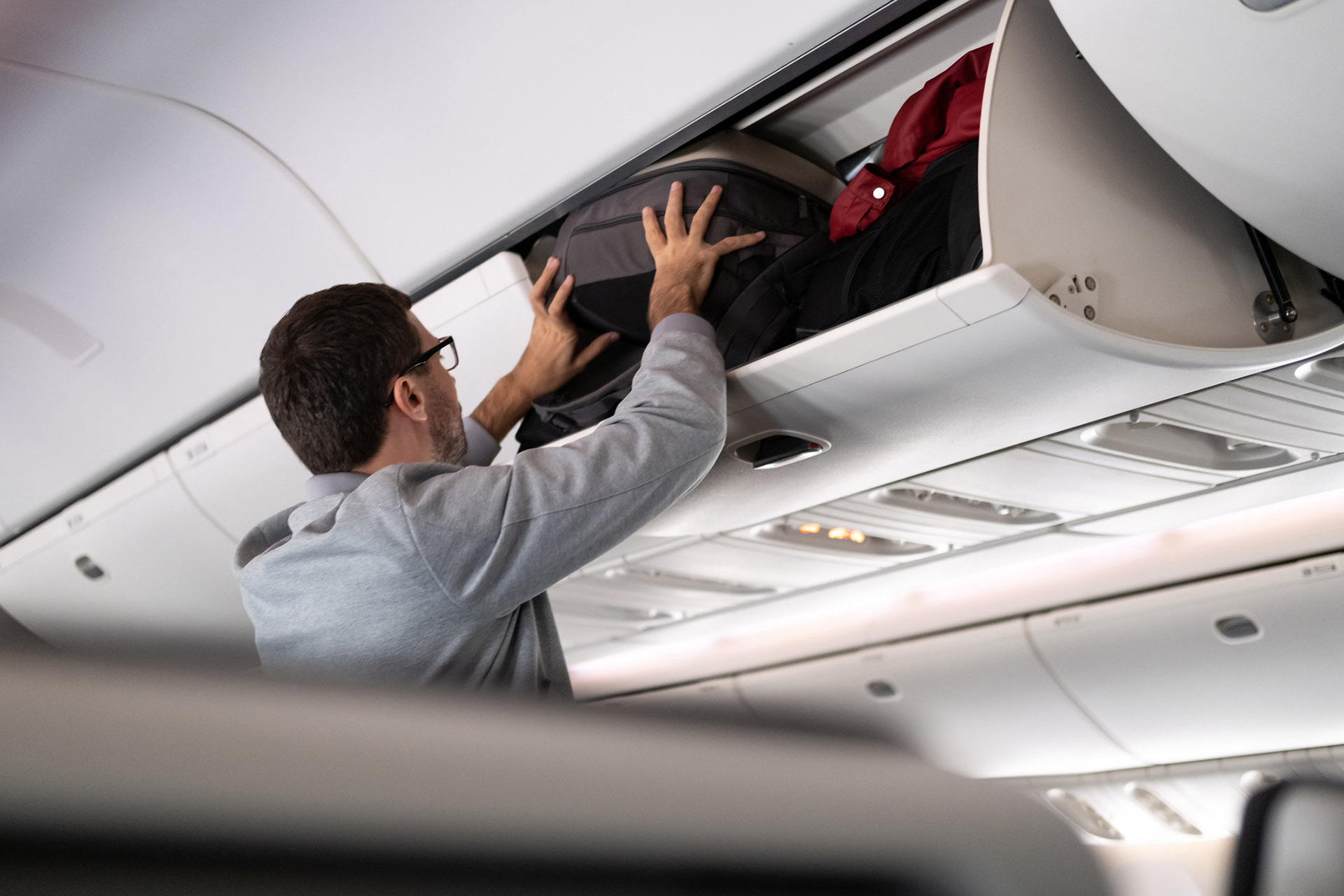
In the case of the Tokyo arrest, reports said the 51-year-old suspect would pretend to be checking his own luggage in the overhead compartment, but instead stealing US dollars, Euros, and Yen from fellow travellers’ bags. The cash was swapped with lower-value small denomination Cambodian riel or Indonesian rupiah, to maintain the wallets’ weights and sizes.
It’s not just cash or valuables that can be targeted. Passports continue to fetch a sizeable price on the black market.
So, how do you ensure you don’t become a target for plane-based pilfering?
- Pack smartly and keep your valuables on you
- Avoid leaving high-value items such as passports, cash, or phones unattended
This is your first line of defence. Packing smartly is crucial. Opt for a sturdy backpack, preferably one that can be securely locked and marked with colourful zip ties for easy identification. If the zip tie is missing or tampered with, it’s important to alert a cabin crew staff member immediately.
Store larger bags in overhead lockers to keep them safe. If the space is available, it can be useful to place them across the aisle so you can easily see if anyone is foraging through them who shouldn’t be.
For high-value items such as passports, cash, and phones, our best practice is to use a secure waist pouch or carry them in your pocket. Avoid leaving them unattended altogether and always keep them in sight. This not only minimises the risk of theft but also ensures that insurance claims are not negatively impacted due to negligence.
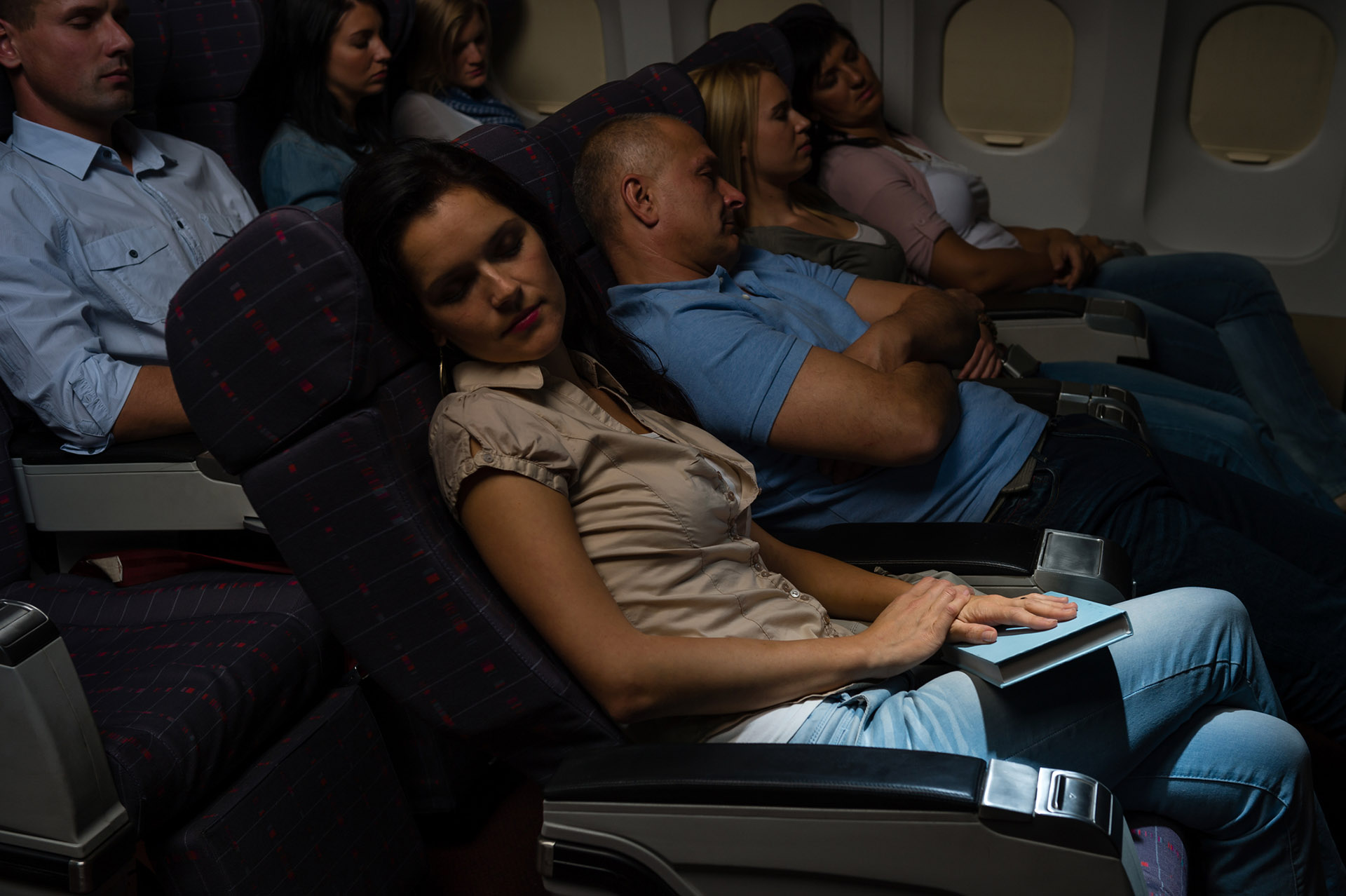
Mealtimes, sleeping, or trips to the toilet offer opportunistic thieves the perfect time to strike!
- Flights offer thieves unique opportunity to steal valuables, says insurance expert
- Remaining vigilant, keeping key items on you, and packing safely is advised
What should travellers do if they fall victim to inflight thefts?
Report the incident to the airline as soon as you realise something is missing, in accordance with the Montreal Convention’s guidelines.
This international treaty requires airlines to offer compensation for lost or damaged luggage on international flights. Although the treaty’s stance on stolen luggage is less explicit, it’s crucial to notify the airline as soon as possible.
Secondly, travellers should obtain all necessary documentation to support their case. This includes requesting a Property Irregularity Report (PIR) from the airline. Additionally, it’s vital to keep all related documents such as tickets, luggage tags, and receipts for any emergency purchases, as these form an essential part of any subsequent insurance claims.
It’s important to also involve the local police. Reporting the theft to the police and securing a police report is a critical step, as it provides official documentation of the theft, which is often necessary for insurance claims.
What should travellers do if they need to make an insurance claim?
Once you’ve advised the airline and the police, it’s vital to thoroughly review your travel insurance policy. Even though policies will typically cover such incidents, it’s essential to understand the policy’s limits and exclusions, and additional premiums may be required for high-value items.
Next, gather all necessary evidence, including proof of ownership, age, and value of the stolen items, which are crucial for the claim process. It’s also important for travellers to assess their responsibility in the situation. Ensuring that valuables were secured, and that luggage was not left unattended is key, as negligence can impact the viability of a claim.
By remaining vigilant during your flight, applying common sense and following the tips we’ve described above, we’re sure your next flight will be free from the dramas recently reported in Singapore.
Safe travels!
Related Articles

Experience the Difference with Singapore Airlines
We recently caught up with our friends at Singapore Airlines to talk about their selection of cabins, their newly refurbished airport lounges, and the experience they bring to business travellers.

The True Value of Face-to-Face Meetings
In an age of video calls and digital collaboration, is business travel still worth it? The data says yes. From closing 37% more deals to building stronger client relationships, face-to-face meetings continue to deliver measurable value that virtual interactions simply can’t match. Here’s why in-person engagement remains one of the most powerful tools in business.

Travel Talks – How Corporate Travel is Becoming More Personalised
Business travellers are demanding – and expecting – much more personalised travel experiences. We’re joined by United Airlines to examine how the industry is evolving in order to deliver unique services and experiences for corporate travellers, based on their individual preferences, selections and destinations.
LET’S TALK
Fill in the form below and we’ll get back to you as soon as we can.