
Travelling to São Paulo?
Are you planning on travelling to São Paulo for work? Get to know one of the world’s most dynamic cities in this comprehensive guide for business travellers.
Founded by Jesuit missionaries in 1554 on a plateau above the Atlantic coast, São Paulo has grown from a modest colonial settlement into the largest city in the Southern Hemisphere and the undisputed financial engine of Latin America. The transformation is staggering. What was once a quiet trading post now generates more economic output than many sovereign nations.
The contrast is part of what makes São Paulo so interesting. The gleaming towers of Paulista Avenue corridor stand alongside vibrant street art in the suburbs; the energy of the financial district dissolves, just streets away, to exceptional restaurants and a nightlife scene renowned across the continent.
The numbers speak for themselves. São Paulo’s metropolitan GDP exceeds $400 billion, making it one of the top 10 largest city economies in the world. The city is home to the B3 – Brasil Bolsa Balcão – Latin America’s largest stock exchange and hosts the Brazilian headquarters of the majority of the world’s leading multinationals operating in South America.
In this comprehensive guide for business travellers, we help you navigate São Paulo’s unique business ecosystem, share practical tips for getting around, and highlight our top 3 things to see or do to make your trip unforgettable.
São Paulo Fact File
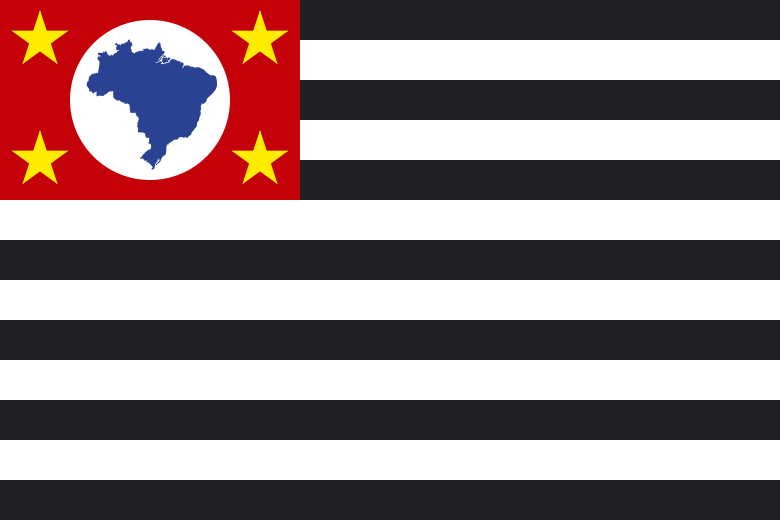
The flag of São Paulo, featuring a white circle enclosing an outline map of Brazil in blue.
- Summer (Dec–Feb): 28°C (82°F)
- Autumn (Mar–May): 23°C (73°F)
- Winter (Jun–Aug): 18°C (64°F)
- Spring (Sep–Nov): 24°C (75°F)
Getting To São Paulo
By Air
“de avião”
Guarulhos International Airport (GRU), approximately 25 km northeast of the city centre, is the busiest airport in Latin America and the destination for most long-haul business travellers.
Alternatively, Congonhas Airport (CGH) sits just 8 km from the city centre and handles the majority of domestic routes, particularly the route between São Paulo and Rio de Janeiro. Its proximity makes it significantly more convenient for domestic connections, and it is the preferred option for travellers arriving from other Brazilian cities.
By Road
“de carro”
São Paulo has one of the most extensive motorway networks in South America, but traffic congestion is severe and largely unpredictable.
The city regularly features among the world’s most congested, and journey times by road can be highly variable even outside traditional peak hours. Self-driving is not recommended for business travellers unfamiliar with the city. Pre-arranged executive car services or app-based rideshares remain the most practical ground transport options.
By Rail
“de trem”
São Paulo, and indeed Brazil, does not currently operate a high-speed intercity rail network comparable to European or Japanese equivalents, making domestic flights the standard option for travelling between cities.
Within the São Paulo metropolitan area, however, the CPTM commuter rail network and the Metro system connect many key districts.
Business Culture & Etiquette
Doing business in São Paulo is all about understanding the city’s particular professional culture. Paulistanos, as residents of São Paulo are known, are widely regarded as Brazil’s most business-focused professionals, and the pace and expectations of corporate life here can feel closer to New York or London than to other Brazilian cities.
That said, relationships remain central to everything. Business in Brazil is personal. Deals are built on trust, and trust is built through time and a genuine willingness to engage. Expect initial meetings to focus as much on getting to know one another as on the substance of business.
Physical greetings are the norm. Handshakes are standard in formal settings; among established contacts, a kiss on the cheek (one or two, depending on the region) is common, particularly with women. Business cards are often exchanged, and having cards printed in both English and Portuguese is a thoughtful touch that will be noticed.
A Few Other Business Etiquette Top Tips
- Punctuality norms differ. While you should always aim to arrive on time, your Brazilian counterparts may not. This is cultural rather than disrespectful.
- Dress to impress. São Paulo has a strong culture of professional presentation. Appearance is taken as a signal of seriousness.
- Football and food are often good topics of small talk. Avoid political discussions, particularly around Brazilian domestic politics, until you know your counterparts well.
Crime & Safety
São Paulo has a reputation of being unsafe which is partly based in reality. While the city is perfectly navigable for business travellers who take sensible precautions, it does require a higher level of situational awareness than many other major business destinations.
Petty theft and opportunistic crime are the primary risks in most areas frequented by business travellers. Avoid displaying expensive watches, jewellery, or phones in public, particularly on foot. The Paulista Avenue corridor, Itaim Bibi, Pinheiros, and Vila Olímpia – the city’s main business and hotel districts – are well-policed and generally safe during business hours. Exercise greater caution after dark and in unfamiliar neighbourhoods.
Ride-hailing apps (Uber and 99) are strongly preferred over hailing taxis on the street, both for security and convenience. Most business hotels operate in areas with good security infrastructure, and travel precautions, including pre-booked transfers from the airport, are worth following.
A Few Other Crime & Safety Tips
- 190 is the police emergency number in Brazil. 192 covers medical emergencies and 193 the fire service.
- Portuguese is the language of Brazil, and English proficiency outside of corporate environments is variable. A translation app is a valuable companion.
- Brazil drives on the right-hand side of the road.
Getting Around São Paulo
By Metro
“de metrô”
São Paulo’s Metro system is clean, efficient, air-conditioned, and the most reliable way to navigate the city during business hours. The network covers key business districts including Paulista Avenue (Trianon-MASP and Consolação stations), Faria Lima (Faria Lima station), and the central business district.
Single journey tickets and day passes are available, and the system is straightforward to navigate with bilingual signage. Trains run from approximately 4:40am to midnight.
By Bus
“de ônibus”
São Paulo has one of the largest bus networks in the world, with over 1,300 routes covering virtually every corner of the city.
For business travellers, however, buses are generally not the most practical option. Routes are complex, traffic congestion affects journey times significantly, and navigating the system without Portuguese and local knowledge is challenging. The Metro and ride-hailing apps will serve most business travel needs more reliably.
By Taxi & Rideshare
“de táxi”
Uber and 99 are the dominant ride-hailing platforms in São Paulo and are both widely available and strongly recommended for business travellers. Both apps allow you to set your destination without verbal communication, accept card payment, and provide a record of your journey.
Street taxis are available but exercising caution is advised. Always use licensed, metered cabs or pre-booked executive car services rather than accepting unsolicited offers of rides.
Top 3 Things to See or do in São Paulo
If you find yourself with a bit of free time on your business trip, São Paulo is a city built for exploration and offers plenty to see and do. Here are our top 3 recommendations…
1. MASP: Museu de Arte de São Paulo
One of the finest art museums in Latin America, MASP sits directly on Paulista Avenue at the heart of the city’s business district, making it one of the most accessible cultural stops for any business traveller with an evening to spare.
Its collection spans Renaissance masters, Impressionists, and a remarkable breadth of Brazilian modern art, all displayed in a striking red brutalist building that has become one of São Paulo’s most iconic landmarks. The open plaza beneath the museum is equally worth experiencing.
2. Vila Madalena and the Beco do Batman
For an experience that is distinctly São Paulo, Vila Madalena is unlike any other neighbourhood in the city. This bohemian district is the epicentre of the city’s creative and cultural life, and its streets are covered in extraordinary large-scale street art, most famously in the Beco do Batman, an alleyway whose every surface has been transformed into an ever-changing open-air gallery.
The surrounding neighbourhood is also home to some of the city’s best bars, restaurants, and independent boutiques. An evening here is a genuine window into a side of São Paulo that corporate schedules rarely allow time for — and all the more memorable for it.
3. Ibirapuera Park
Every great city has a great park, and Ibirapuera is São Paulo’s. Designed by the legendary landscape architect Roberto Burle Marx and opened in 1954, it spans over 160 hectares in the heart of the city.
Within the park, you’ll find the São Paulo Museum of Modern Art (MAM), the Afro Brasil Museum, and the iconic Oca pavilion – a gleaming white dome designed by Oscar Niemeyer. On weekday mornings, when the park is quieter and the light is at its best, it makes for an outstanding start to the day before meetings begin.
Discover São Paulo…
São Paulo is not simply one of Latin America’s largest cities, it is one of the world’s great business destinations and one of its great cities full stop.
The combination of economic scale, cultural depth, and genuine Brazilian energy makes it a destination that rewards those who arrive prepared. The challenges are real: traffic, security awareness, and the language barrier all require practical preparation. But it’s all worth it.
So whether you are meeting partners in the financial towers of Faria Lima, exploring investment opportunities in the tech corridor around Vila Olímpia, or attending a conference on Paulista Avenue, the city has an energy that is easy to get lost in and leave you wanting to come back.
City Guides

Istanbul: A Business Traveller’s Guide
Are you planning on travelling to Istanbul for work? In this comprehensive guide to Istanbul for business travellers, we delve deeper into navigating the city’s unique corporate landscape, offer our top tips for getting around, and pick out our top 3 things to see or do to make your trip unforgettable.

Mexico City: A Business Traveller’s Guide
For business travellers, Mexico City is a destination with plenty to offer. Whether it’s attending meetings in Polanco, closing deals in Santa Fe, or enjoying authentic tacos and a tequila after a busy day, the city provides the perfect combination of business and pleasure. In this comprehensive guide for business travellers, we help you navigate Mexico City’s unique business ecosystem, share practical tips for getting around, and highlight our top 3 things to see or do to make your trip unforgettable.
Warsaw: A Business Traveller’s Guide
For business travellers, Warsaw offers plenty of excellent opportunities. Whether you’re attending meetings in the gleaming office towers of Wola or exploring the city’s rich cultural heritage after hours, Warsaw consistently delivers. In this comprehensive guide for business travellers, we help you navigate Warsaw’s unique business ecosystem, share practical tips for getting around, and highlight our top 3 things to see or do to make your trip unforgettable.