
The Importance of Being Human in an Increasingly AI World
And other learnings from the ITM Conference 2026We recently attended the ITM Conference 2026 to find out some of the latest travel trends…
Travelling more sustainably, utilising AI responsibly, and the growing importance of human relationships in an increasingly intelligent digital world were among the biggest topics at this year’s conference.
It showed that traveller experience is no longer a “nice to have” but a key measurement of a successful travel programme. The ability to remain flexible in the face of disruption, an understanding of how travel and hybrid working fit, and the idea of travel having a “purpose” also caught the headlines.
In this article, we give a rundown of the 5 hottest topics to emerge from the ITM Conference 2026.
5 Talking Points from the ITM Conference 2026
1.
Hybrid Working Has Changed the Purpose of Travel
One of the biggest challenges facing travel managers today is that the workforce rarely operates on a single schedule.
Hybrid and remote working models have created greater flexibility for employees, but they’ve also raised new questions. Travelling into an office only makes sense if there’s a meaningful reason to be there. If key colleagues are working remotely or meetings could have been conducted virtually, the journey can quickly feel like wasted time, money, and carbon.
Employees increasingly want travel that serves a clear purpose. They expect greater flexibility around when, where and how they travel, rather than being forced into rigid programmes designed for a pre-pandemic world.
This presents an opportunity for organisations to rethink travel policies. Rather than focusing solely on controlling behaviour, successful programmes will help employees make informed decisions about when travel genuinely adds value.
The emphasis is shifting from “How do we reduce trips?” to “How do we make every trip worthwhile?”
2.
The More AI We Use, The More Human Expertise Matters
Artificial intelligence was, unsurprisingly, one of the hottest topics of the conference.
From itinerary building and traveller communications to disruption management and reporting, AI is rapidly becoming embedded throughout the travel ecosystem. The potential benefits are substantial, offering greater efficiency, faster response times, and improved access to information.
Yet one of the more interesting observations from the event was that increased automation appears to be creating greater demand for human interaction rather than less.
When travel goes smoothly, technology can handle much of the process. However, when plans change, flights are cancelled, geopolitical events emerge or travellers simply need reassurance, people still want to speak with someone who understands their situation.
The value of experienced travel consultants, account managers and operations teams remains incredibly high. Travellers don’t just want answers; they want confidence that they’re being supported by someone who understands both the practical and emotional impact of disruption.
Technology may be driving the revolution, but human expertise continues to define the quality of the traveller experience.
3.
Flexibility During Disruption is Becoming a Competitive Advantage
The geopolitical upheaval of recent years has demonstrated how quickly travel conditions can change.
Whether it’s the conflict of instability, airspace restrictions, extreme weather or operational disruptions, organisations need confidence that their travel programmes can adapt rapidly when circumstances evolve.
A recurring discussion point at ITM was how prepared TMCs are to manage these situations in real time.
Can alternative routes be sourced quickly? How easy is it to reroute travellers away from emerging risk areas? If a traveller needs to avoid a particular region or airline, can those changes be implemented efficiently and at scale?
The answer increasingly depends on the combination of technology, supplier relationships and operational expertise available within a TMC.
Traveller experience is tested most heavily when things go wrong. The organisations that can react quickly, communicate clearly and provide practical solutions will continue to stand out in an increasingly competitive market.
4.
AI Needs to Move Beyond Simply Judging What it Can Do
While much attention is focused on what AI can do, the conference highlighted a growing need to discuss what AI should do.
Questions surrounding data privacy, governance and compliance are becoming increasingly important as organisations adopt AI-powered tools across their travel programmes.
Where is traveller data stored? How is it being processed? Who has access to it? What safeguards are in place to ensure compliance with regulatory requirements?
These aren’t secondary considerations, but fundamental questions that organisations must answer before implementing new technologies.
Perhaps the most important takeaway was that “AI” means very different things depending on who you’re speaking to. For some organisations, it refers to automation and workflow optimisation. For others, it means predictive analytics, conversational interfaces or advanced data processing.
Understanding precisely what technology is being used, how it operates and how data is protected will become just as important as the functionality itself.
5.
Relationships Still Matter as Much as They Always Have
Among all the discussions around technology and innovation, one traditional principle remained unchanged: Real, human relationships continue to drive successful business travel partnerships.
In an industry increasingly shaped by digital interactions, face-to-face engagement still creates trust, strengthens partnerships and uncovers opportunities that might otherwise be missed.
The best travel programmes are built on a genuine understanding of client objectives, traveller needs and organisational culture, something that cannot be achieved through technology alone.
Looking Ahead
The conversations at ITM Conference 2026 reflected an industry that is evolving rapidly.
Cost control remains important, but it is no longer the sole priority. Organisations are placing greater emphasis on traveller wellbeing, sustainability, flexibility and meaningful travel experiences. At the same time, AI is creating exciting opportunities while raising important questions around governance and trust.
Perhaps the biggest lesson from the conference is that the future of business travel will belong to organisations that successfully combine smart technology with genuine human expertise.
Related Articles

The Economics of a Flight
To most passengers, an aircraft full of people looks like a guaranteed success. But the economics behind every flight tell a very different story. Airlines operate one of the most complex business models in the world, where millions of pounds of investment, thousands of operational decisions, and razor-thin margins all come together for a single journey.
Arrive in Mint® Condition
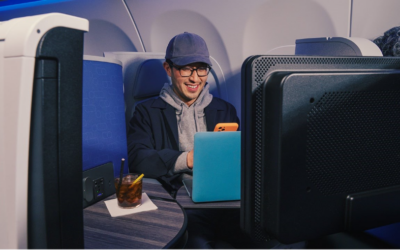
There’s a lot happening at JetBlue right now. Here’s the latest on their award-winning Mint® product, expanded transatlantic routes and everything they need before their next trip across the Atlantic. JetBlue operates nonstop flights from London Heathrow and London Gatwick to New York JFK and Boston, plus Edinburgh to Boston, with connections to over 100 destinations across the US, Latin America and the Caribbean.

Warsaw: A Business Traveller’s Guide
For business travellers, Warsaw offers plenty of excellent opportunities. Whether you’re attending meetings in the gleaming office towers of Wola or exploring the city’s rich cultural heritage after hours, Warsaw consistently delivers. In this comprehensive guide for business travellers, we help you navigate Warsaw’s unique business ecosystem, share practical tips for getting around, and highlight our top 3 things to see or do to make your trip unforgettable.