
Istanbul: A Business Traveler's Guide
your complete introduction to the cultural & economic capital of TurkeyTraveling to Istanbul?
Are you planning on traveling to Istanbul for work? Get to know the second most visited city in the world better in this comprehensive guide for business travelers.
The beating heart of Istanbul lies beneath the surface of the Bosphorus Strait. This international waterway connects the Mediterranean Sea to the resource-rich countries bordering the Black Sea, earning Istanbul its reputation as the tie that binds Europe and Asia.
The history of Istanbul is defined by change. First founded by the Greeks as Byzantium in the 7th Century BCE, the city became the imperial capital of New Rome during the reign of Roman emperor Constantine the Great who later renamed the city Constantinople in his own honour. The city steadily grew in size and influence, becoming a landmark of the Silk Road trade route and playing a key role in the advancement of Christianity during the Roman era.
Today, Istanbul (as it was renamed in 1930) continues to be an economic and cultural powerhouse on the border between Europe and Asia. On the European shores of the Bosphorus, just north of Taksim Square, is the Istanbul Central Business District (CBD), a 2 million m² area of sleek office buildings, shopping centres, and university campuses, their character forged by the intricacies of Byzantine and Ottoman architecture.
Istanbul offers business travelers a wealth of opportunities. Its strategically significant spot along the Bosphorus Strait is responsible in no small part for the city being named the 11th-largest urban economy in 2018. Indeed, international trade is key to Istanbul’s success – roughly 200 million tons of oil passes through the city each year and the $83.66 billion it received from exports in 2019 represented a massive 61% of the country’s national total.
In this comprehensive guide to Istanbul for business travelers, we delve deeper into navigating the city’s unique corporate landscape, offer our top tips for getting around, and pick out our top 3 things to see or do to make your trip unforgettable.

🇹🇷 Istanbul Factfile
Features the Bosphorus strait, the city walls, and prominent minarets rising above seven "hills" represented as triangles.
🌤 Average Temperatures
- Summer (Jun–Aug): 23.5°C (74°F)
- Autumn (Sep–Nov): 17°C (62°F)
- Winter (Dec–Feb): 7.3°C (45°F)
- Spring (Mar–May): 13.5°C (56°F)
Getting to Istanbul
BY AIR
“hava yoluyla”
Istanbul is served by two major international airports: Istanbul Airport (IST) on the European side (25 miles west of the city) and Sabiha Gökçen International Airport (SAW) on the Asian side (around 25 miles southeast of the city). Istanbul Airport is one of the busiest airports in the world and is the home to the national carrier Turkish Airlines. Both airports operate a HAVABUS shuttle bus which takes passengers to central city areas such as Taksim or Kadıköy in around 40-60 minutes.
BY SEA
“deniz yoluyla”
Istanbul is a popular entry point for cruise ships and ferries. The city’s Karaköy Port and Yenikapı Port are the main terminals for international cruise ships arriving from destinations like Greece, Italy, and Croatia. Ferries from nearby Bosphorus cities, such as Bursa and Yalova, also provide quick transportation to Istanbul. Private yachts and boats can dock at marinas like Ataköy Marina or Kalamış Marina on the city’s European and Asian sides.
BY ROAD
“karayoluyla”
The most common road routes include O-1 and O-2, which are part of the E80 European route, connecting Istanbul with other major Turkish cities. The O-1 highway runs through the European side of Istanbul, linking it to cities like Edirne and Bursa, while the O-2 connects the city to the Asian side via the Marmaray Tunnel and Yavuz Sultan Selim Bridge. From Ankara, the E90 (D100) highway leads to Istanbul, while travelers from the south (e.g., Antalya) can take the O-5 highway.
Business Culture & Etiquette
While Turkish business culture is fast-paced, it is generally warm with a strong emphasis on respect and hospitality.
Greetings
A handshake and direct eye contact are the usual way to start a business meeting. When meeting someone for the first time, it is polite to use their title and surname. You’ll often hear “Bey” for men and “Hanım” for women used after a first name, such as Mehmet Bey or Elif Hanım. If you’re unsure, follow the lead of the person you’re meeting.
Meetings
Don’t be surprised if a meeting runs over or the conversation takes an unexpected turn. Turkish meetings can be quite conversational, with plenty of time given to introductions, catching up before getting down to business.
Dress Code
Suits are common for formal meetings, particularly in finance, law and corporate worlds. In more creative or technology-focused businesses, you may see a more relaxed approach, but smart dress is generally the safest option.
Relationships
In Turkey, who you are doing business with can be just as important as what you are offering. Time spent over a coffee, lunch or dinner can be part of the business process rather than a distraction from it.
💡 Top Travel Tip
Turkish hospitality often makes its way into the workplace. Çay (tea) is offered frequently, and Turkish coffee is another common part of a meeting.
Safety & Pratical Advice
Istanbul is generally a safe city for business travelers. However, with any large city, it pays to stay aware of your surroundings, especially around quieter areas late at night.
Food & Drink
Turkish tea and coffee are a big part of everyday life, and you’ll find them offered everywhere from business meetings to restaurants. Food standards are generally good, but as with any destination, use a little common sense with street food and choose busy vendors where food is being freshly prepared.
Out & About
Turkey has a tipping culture, although it is less rigid than in some countries. In restaurants, leaving around 5% to 10% for good service is customary. Tips are also appreciated by hotel staff, taxi drivers and tour guides, particularly where you’ve received good service.
Getting Around
Istanbul’s size and famously unpredictable traffic mean journeys can take longer than they look on a map. The metro, tram, ferry, and Metrobüs networks are useful for avoiding the worst of the traffic, while taxis and ride-hailing apps are widely used.
Weather
Istanbul has four distinct seasons, with hot, humid summers and cool, wet winters. July and August can be particularly warm, while winter brings cooler temperatures and occasional snow. Spring and autumn are generally comfortable for walking around the city, although rain can arrive quickly. The Bosphorus also means the weather can feel noticeably cooler and windier than expected.
Emergency Services
Turkey’s main emergency number is 112. English-language assistance may be available, particularly in central Istanbul.
💡 Top Travel Tip
Istanbul sits close to the North Anatolian Fault, making it one of the world’s major cities with significant seismic risk. The city has invested heavily in earthquake preparedness and strengthening vulnerable buildings through its ISMEP programme.
Best Destinations for Business Travellers
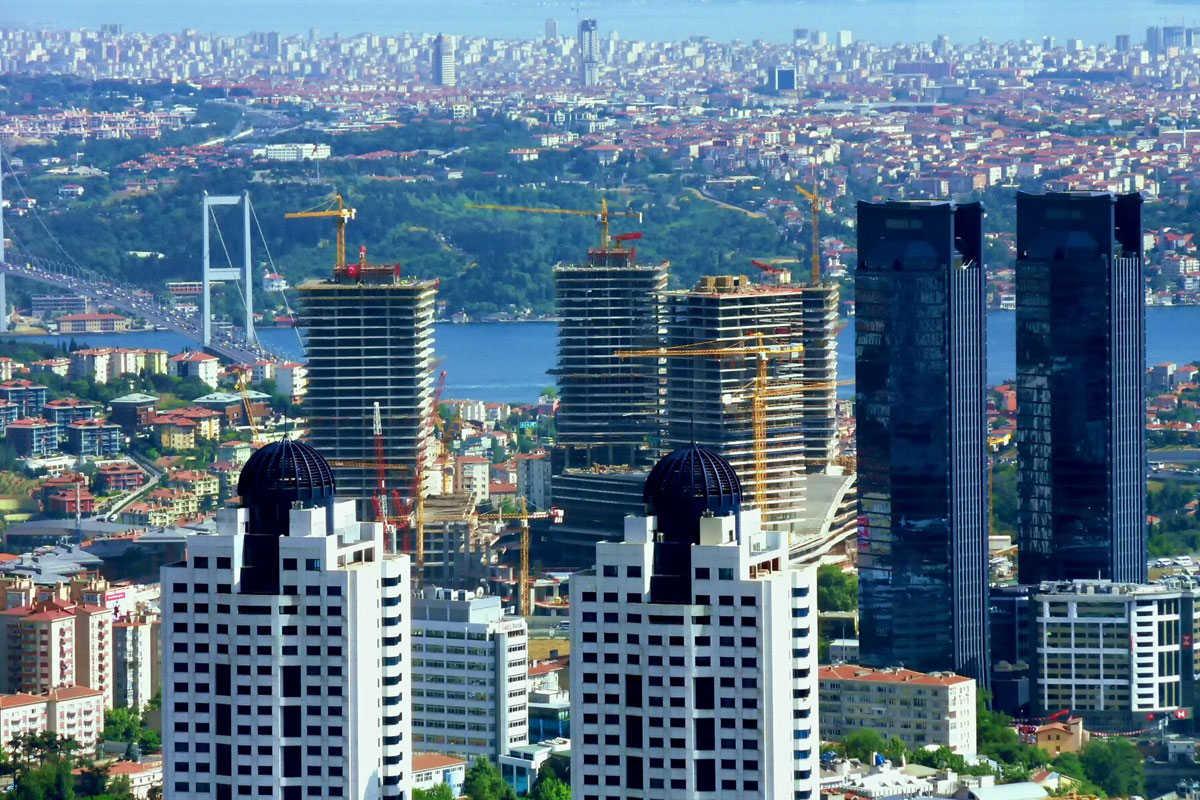
Levent
One of Istanbul’s best-established business districts, Levent has a magnificent skyline of international organizations running along Büyükdere Avenue. It is also one of the more convenient areas for business travelers, with direct access to the M2 metro and plenty of hotels and meeting spaces nearby.
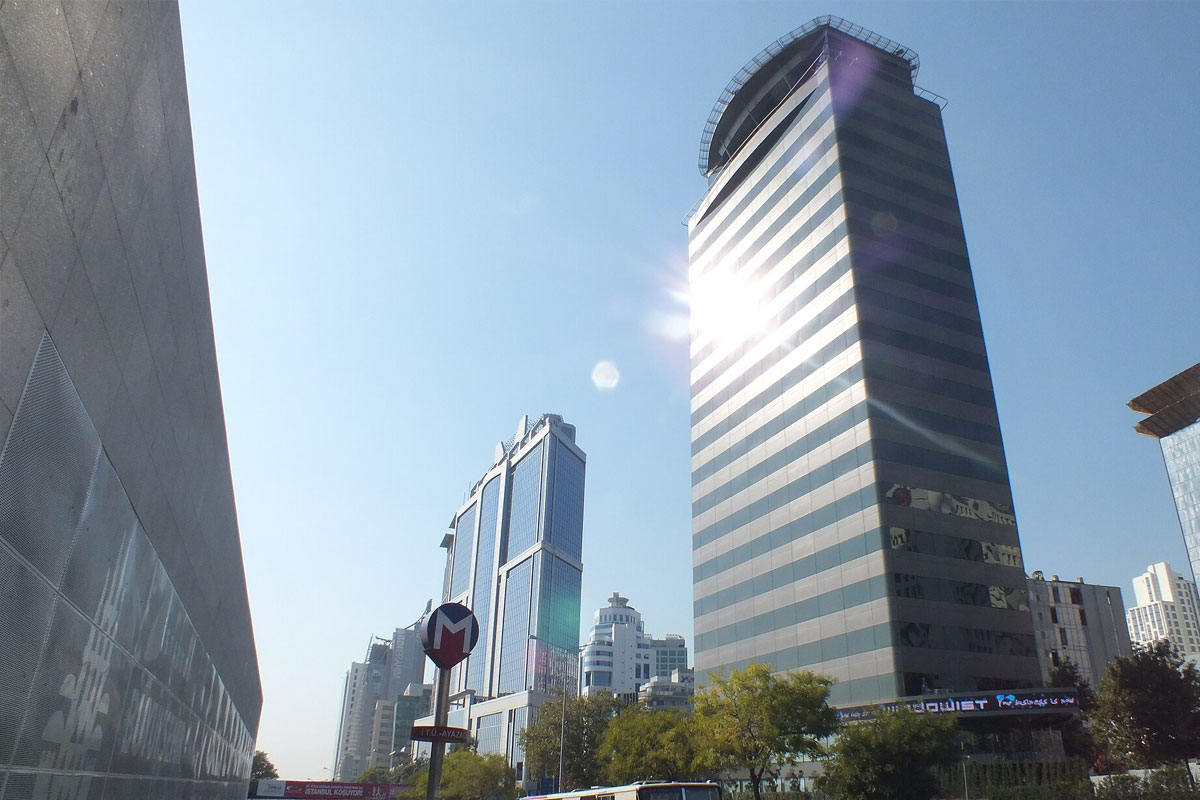
Maslak
Maslak in the north of the city is characterized by modern office towers inhabited by finance, technology, and other multinational companies. Its location puts business travelers close to attractions such as Istanbul Technical University and İstinyePark, making it a useful base for meetings further north.
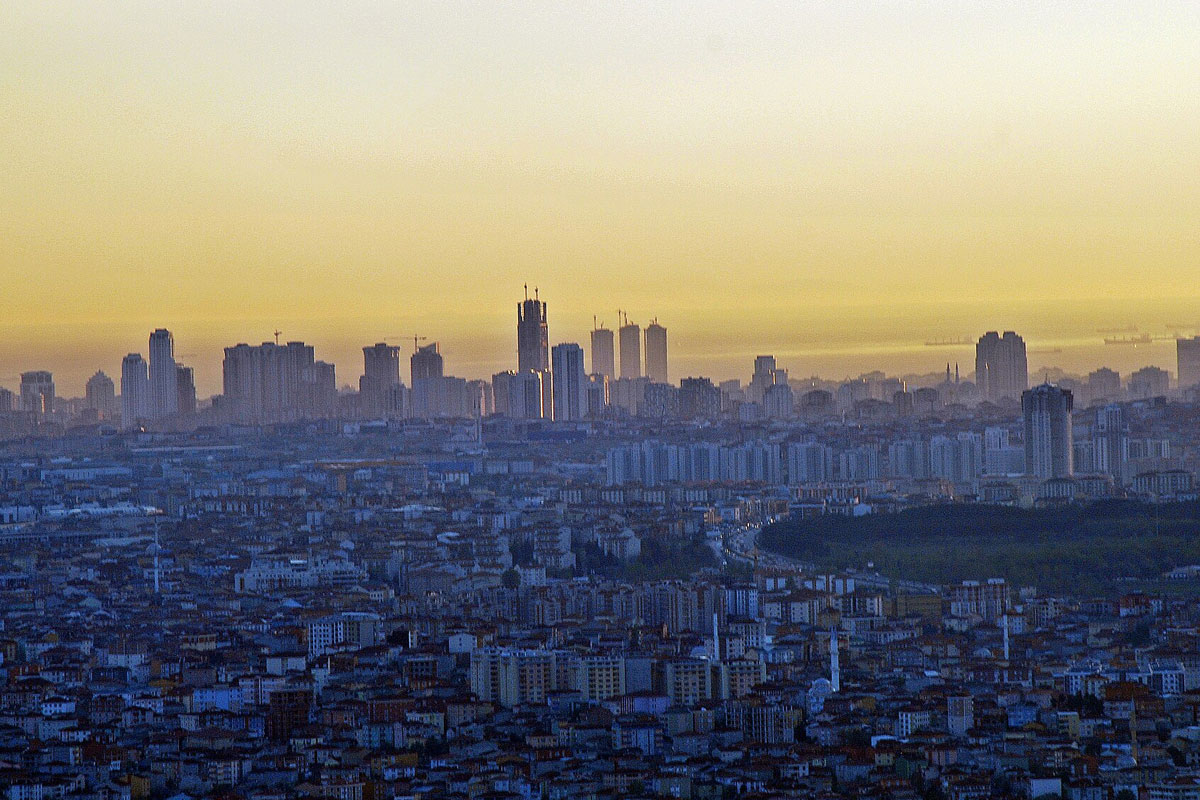
Ataşehir
On the Asian side of Istanbul, Ataşehir has emerged as a major commercial center, anchored by the Istanbul Financial Center. The district has a very different feel to historic Istanbul, with purpose-built office towers, wide avenues, and large-scale developments.
How to Get Around the City
Metro
Istanbul has a well-developed metro system, with 7 lines represented by different colours connecting major areas of the city. The busiest of these lines includes the M2 (green line) which connects central locations like Taksim Square and Şişli to farther areas, and the M4 (purple line) which services the Asian side of the city, including Kadıköy and Kartal. The most convenient way to pay for metro rides is using an Istanbulkart, a smart card that can be used on all forms of public transportation, including the metro, buses, trams, and ferries.
Ferries
Since Istanbul straddles two continents, Bosphorus Ferries are popular. Passengers can easily cross from the European side (e.g., Eminönü) to the Asian side (e.g., Kadıköy) via the water, offer beautiful views of the Bosphorus Strait. The ferries run frequently throughout the day, with departures typically every 30 minutes to 1 hour, depending on the route and time of day. Be aware that the Bosphorus Strait is known for strong winds, particularly in the winter months, so it's advisable to wear some kind of jacket or jumper.
Taxi & Ride-Hailing
Car ride-sharing in Istanbul has become increasingly popular due to the city’s high levels of traffic. Uber, perhaps the most recognizable ride-sharing service globally, is available in the city. Alternatively, travelers can use the Turkish ride-hailing app BiTaksi, a popular alternative that allows users to book traditional taxis - perfect for those who prefer local taxis but still want the convenience of app-based bookings. Other ride-hailing services include Yandex.Taxi - a service originating from Russia - or Taksim.
Top 3 Things to See or Do in Istanbul
1. Hagia Sophia
One of the most iconic landmarks in Istanbul, Hagia Sophia is a masterpiece of Byzantine architecture and a symbol of Istanbul’s rich history. Originally built as a cathedral in the 6th century, it later became a mosque and is now a museum. The building boasts stunning mosaics, an impressive dome, and a sense of grandeur that reflects the city’s diverse cultural and religious history.
Besides the magnificent dome, highlights of Hagia Sophia include displays of beautiful calligraphy and architecture which blend Christian and Islamic influences in a uniquely awe-inspiring way.
2. Topkapi Palace
Topkapi Palace was the primary residence of the Ottoman sultans for almost 400 years and is a prime example of Ottoman architecture and culture. It is now a museum, showcasing imperial treasures, stunning courtyards, and expansive gardens with panoramic views of the Bosphorus Strait.
The palace houses an impressive collection of artefacts, including the famous Topkapi Dagger and sacred relics like the Prophet Muhammad’s cloak and sword. You can also explore the Harem, Imperial Treasury, and Sultans’ private chambers which provides a glimpse into the opulent lifestyle of the Ottoman elite.
3. A Bosphorous Cruise
A Bosphorus cruise is a peaceful way to experience Istanbul’s unique position straddling Europe and Asia. The cruise takes you along the Bosphorus Strait, providing stunning views of historic palaces, mansions, and famous landmarks such as the Bosphorus Bridge and Dolmabahçe Palace. It’s a fantastic way to appreciate the city’s architectural beauty and lush landscapes from the water.
For an extra romantic experience, embark on one of the sunset cruises and watch Istanbul’s unique skyline come to life in the fading light.
Discover Istanbul…
Istanbul is a city which blends modern business with a rich history shaped by the rise and fall of empires across the centuries.
Business travelers looking to forge valuable connections will find that the city between the coasts of the Black and Marmara Seas offers almost limitless opportunities. The strategically significant Bosphorus Strait, which splits the city in two, is a constant hive of activity and remains one of, if not the most, important trade routes between Europe and Asia – particularly important for anyone looking to break into both of these markets.
Beyond the boardrooms, Istanbul is a historic gem that spans the Byzantine period of the early 1st millennium, through the Roman Empire, and into the near-600-year rule of the Ottomans, which ended in 1922 – well within the realms of living memory. Business travelers looking to experience the city outside of office hours will find stunning Ottoman and Byzantine architecture woven through the twisting streets and vibrant energy among the famously hospitable locals.
City Guides
Mexico City: A Business Traveller’s Guide
For business travellers, Mexico City is a destination with plenty to offer. Whether it’s attending meetings in Polanco, closing deals in Santa Fe, or enjoying authentic tacos and a tequila after a busy day, the city provides the perfect combination of business and pleasure. In this comprehensive guide for business travellers, we help you navigate Mexico City’s unique business ecosystem, share practical tips for getting around, and highlight our top 3 things to see or do to make your trip unforgettable.
Warsaw: A Business Traveller’s Guide
For business travellers, Warsaw offers plenty of excellent opportunities. Whether you’re attending meetings in the gleaming office towers of Wola or exploring the city’s rich cultural heritage after hours, Warsaw consistently delivers. In this comprehensive guide for business travellers, we help you navigate Warsaw’s unique business ecosystem, share practical tips for getting around, and highlight our top 3 things to see or do to make your trip unforgettable.
Rome: A Business Traveler’s Guide
Founded, according to legend, in 753 BC on the banks of the Tiber (by twin brothers Romulus and Remus), Rome has spent the better part of 3000 years at the centre of Western civilisation. But it’s not just its history that sets Rome apart. The city’s metropolitan GDP exceeds €100 billion, and it serves as Italy’s primary centre for government, public administration, media, and defence industries. In this comprehensive guide for business travellers, we help you navigate Rome’s unique business ecosystem, share practical tips for getting around, and highlight our top 3 things to see or do to make your trip unforgettable.
LET’S TALK
Fill in the form below and we’ll get back to you as soon as we can.