
HOW TO HANDLE BUSINESS TRAVEL IN A CRISIS
Expert insights from James Challis, Operations Manager at Gray Dawes TravelWe Spoke to James Challis, Operations Manager at Gray Dawes, to tell us all about how to manage business travel when things don’t go to plan…
In a perfect world, business travel plans would unfold exactly as they’re supposed to. Flights depart on time, meetings go off without a hitch, and travellers return home with more than they left with. Reality, however, is far less predictable, and the recent escalation of conflicts across the Middle East has served as a stark reminder of just how quickly things can change.
Airspace closures, emergency flight diversions, and changing government travel advisories have left business travellers stranded or scrambling, and that’s before factoring in the other disruptions caused by natural disasters or sudden logistical changes that can turn any itinerary on its head.
Managing a trip when something goes wrong is all about staying calm under pressure, communicating properly, and staying flexible in the face of adversity, skills that James Challis, experienced Operations Manager at Gray Dawes Travel, knows beter than most.
In this article, we speak to James about the importance of keeping travellers informed, the benefits of having a well-oiled response strategy, and the power of our TripSure app in keeping travellers safe.
My background is in crisis management, specifically for the business travel industry…
The current conflict in the Middle East, and the huge political and logistical challenges that followed, proved just how important it is for a TMC to be able to handle travel plans when the unexpected happens.
“The Operations model that we have in place at Gray Dawes is hugely beneficial, boosted by our ability to have “boots on the ground” across the globe. We are ‘Always On’, meaning that no matter where someone is in the world, they can benefit from the expertise of an Operations Manager with a clear plan of what to do and when as a crisis unfolds.”
“I created a document which gives an overview of first steps, next steps, and what to do at every stage when a disaster or emergency affects a client’s travel plans.”
“It’s a great way of keeping our service consistent across borders. It aims to answer questions such as: What are the most important things to ensure when a disaster first arises? How do we identify our VIPs? How do we know who’s travelling and to where? It sounds straightforward, but it requires years of expertise to pull off smoothly.”
Once we get a good view of the crisis our travellers are facing, we can start pooling our resources to help.
“Before we do anything else, we identify any travellers affected by a disaster or unexpected obstacle and make sure that they are safe and not feeling any kind of distress. Then we work out what they need and work through them methodically.”
“The beauty of having teams across the world, from Australia to the US, is that an Ops Team is always awake and in an office – you’re not ringing somebody up and getting them out of bed, there is a dedicated team who can provide a unified and consistent service. Put simply, our clients don’t have to phone a third party out-of-hours team who don’t know them or their account – it’s Gray Dawes staff using Gray Dawes technology, 24/7.”
“Once we have got contact, everyone across all levels of the team work hard to provide support. Nobody has to wait for anything – there’s a clear and structured plan that keeps us on course.”
“It probably doesn’t get mentioned enough, but one of our biggest advantages as a TMC in these difficult situations is the bucketloads of experience that our Operations staff have between them. Some people have been here a long time, and travel crisis management is ingrained into them. They already understand what to do when that call comes in.”
It’s important to keep on our toes and testing our crisis management abilities.
“We’ve recently applied to achieve an ISO accreditation in crisis management, something which Gray Dawes values highly – we have already acquired a few others, including ISO 27701, so this will add another string to our bow. We also encourage our clients to consider ISO 31030 – an international standard that provides guidance for organisations on how to manage travel-related risks.”
“Having a formal accreditation behind our already stellar service will be fundamentally huge for our business. It will instil trust in our current travellers and potential client base that we know how to do things in a crisis and we can be trusted to do those things in the right way.”
“We refuse to get complacent, though. We undertake tests on our crisis management processes to ensure that every part of the Operations Team, regardless of their seniority, is aware of what they need to do and when. I’m planning to write up a few tests where we’ll simulate ringing in with an incident and go through the whole motion of dealing with it from start to finish.”
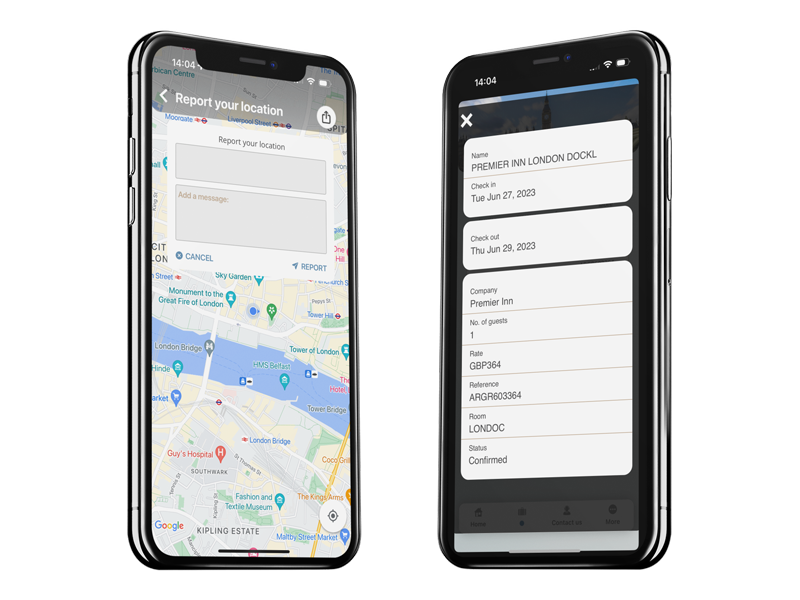
Keep Track of Your Travellers with TripSure
Our fully-interactive TripSure app allows organisations keep track of their travellers, monitor risk alerts, and provides them with all of the information they need to make informed business decisions about their travel.
Working in perfect harmony with our online booking tool, YourTrip, TripSure can be customised with dashboards that monitor the travel insights that matter to you. For those on the move, the easy-to-use app is the perfect travel companion, offering up-to-the-minute flight updates, risk alerts, and a GPS check-in to let their organisation know that they’re safe in an emergency.
Handling travel crises requires a lot of teamwork and collaboration.
“We’ve got great relationships with third parties, both in terms of suppliers who have the tools to bring people home and those that can provide us with data on the fly.”
“We can report on exactly where anybody is in the world at any one time – be it at an airport or on the ground in a foreign country – and determine what is necessary at the time. Our ability to react quickly is brilliant. We can literally find out who’s where and what we need to do in 5 minutes; that’s how quick the reports run. No time is lost.”
“I’m going to reiterate our ‘Always On’ global service because I think it’s such a key differentiator. It doesn’t matter where somebody is in the world; if you call Gray Dawes you will always get through to somebody. For example, if a client rings Gray Dawes’ Australian telephone line when the Australians are asleep, that line will divert to somebody in the UK who can support.”
“In a nutshell, having the technology to support travellers, a robust plan, and enough experienced travel consultants to act on it is the key to a TMC being able to handle anything that comes its way.”
When it Comes to Traveller Safety, TripSure is a Phenomenal Tool
“As a travel manager at an organisation that travels frequently for business, being able to go into the TripSure app and see where anybody is on a given moment is is really beneficial.”
“Having a tool which they can use whenever they like, on top of our Always On service, is a really good way of planning for and getting out of a difficult situation. It’s not really something I’ve seen anywhere else – it really empowers travel managers and travel bookers to better prepare for any obstacles they might encounter. And if they still feel like they need extra support, we’re one phone call or email away.”
“It’s phenomenal tool. Everyone’s got access. Also, the fact that TripSure is seamlessly integrated with our online booking tool, YourTrip, makes it so easy to understand and use. It could be something like a national train strike. They’ll get the alert and they can then go into their booking and amend the tickets themselves – it’s priceless.”
“As a tool, it allows my team the time to focus on the people that might need help with more complex situations that require more bespoke solutions. If someone is already stuck somewhere, for example, the technology might not be enough to get them unstuck. The difference in those final hour situations is having a calm and friendly person to call upon.”
GET IN TOUCH
I’m a Client
I’m a Prospect
I’m a Supplier
I’m a Fan
Related Articles

Bengaluru: A Business Traveller’s Guide
From its early days as a fortified settlement to its transformation into the capital of the state of Karnataka and one of India’s most important technology powerhouses, Bengaluru has built a reputation as a city with one foot in the future and another in the past. In this comprehensive guide to Bengaluru for business travellers, we’ll take a closer look at navigating the city’s unique corporate landscape, share our top tips for getting around, and pick out three of the best things to see or do when you have some time away from the meeting room.

Insights From the Innovation Hub 2026
Five joined us from the UK and four from the Netherlands for our latest Innovation Hub, representing a wide mix of industries. The aim was simple: to listen and share insights. What do travel programmes need to deliver today, and where should we focus next? Despite the variety in the room, the same themes came up again and again. In this article, we take a look at the key talking points and what we learned from them.

Flying Further with Lufthansa Group
We recently spoke to our friends at Lufthansa Group about their global reach, WiFi powered by Starlink, how they’re celebrating 25 years of PartnerPlusBenefit and so much more, including their expanding SWISS Senses A350 fleet.