
The world of business travel is deceptively vast. Floating within its orbit are topics ranging from international air travel and cross-country rail, to wearable travel tech and government border initiatives.
With so much information to digest, it’s easy to miss some of the more interesting business travel facts, figures, and talking points that will no doubt make you stop and think “Wow, I didn’t know that…”
In this article we’ve compiled our pick of things you (probably) didn’t know about business travel.

#1- Airlines Make Less Profit Per Passenger Than You Might Think…
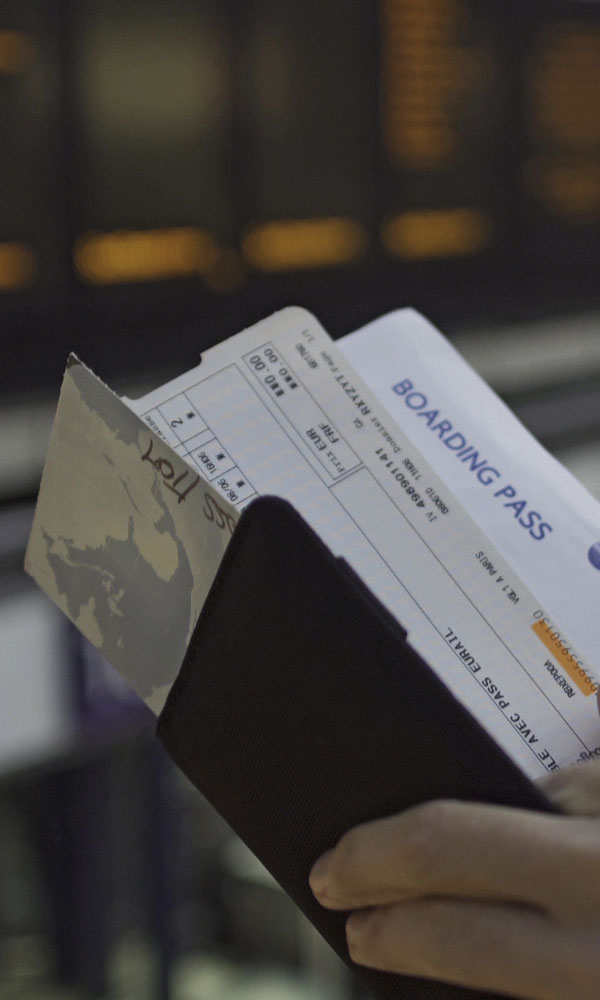
With plane tickets often so expensive, you might be surprised to learn that airlines make relatively little profit from selling them. The numbers speak for themselves – in 2023, airlines made an average profit of just $2 on per passenger ticket sales according to IATA.
Perhaps more startling is that this seemingly small profit is comparatively huge when compared to other periods over the last two decades. After the 2007-08 financial crash, average profit per passenger ticket dropped to -$10, while the more recent COVID-19 pandemic saw profits drop to an all time low, bottoming out at -$76 in 2019.
A considerable proportion of what airlines make does not come from the tickets at all. In fact, it’s all about ancillaries…

#2- A Considerable Proportion of Airline Revenue is Generated by Ancillaries
Much of an airline’s revenue comes from the sale of ancillaries such as premium seat selection, priority boarding, additional baggage and more. According to data from McKinney & Company, 60% of these ancillaries are being sold directly by airlines and their frontline staff, either face-to-face, online, or over the phone. The airlines who ranked in the top five for ancillary revenue in 2023 were:
- Delta = $8.0bn
- United Airlines = $7.9bn
- American Airways = $7.7bn
- Southwest Group = $5.9bn
- Ryanair = $4bn
Revenue generated by ancillaries as a percentage of an airline’s total revenue is also high, with some airlines relying on ancillaries for up to 50% of their income. The following airlines were top of the list in terms of the proportion that ancillary sales contributed to their revenue:
- Spirit = 51.5%
- Frontier = 50.8%
- Allegiant = 48.9%
- Wizz Air = 48%
- Viva Aerobus = 44.5%
#3- The Busiest Passenger Air Routes in the World are ALL Internal Flights
The top 10 busiest passenger air routes across the world does not include a single international or intercontinental flight according to IATA. Instead, domestic flights dominated the skies. The following routes were the busiest in terms of passenger traffic in 2023 so far:
- Jeju-Si to Seoul
- Hanoi to Ho Chi Minh City
- Sapporo to Tokyo
- Melbourne to Sydney
- Fukuoka to Tokyo
- Hanoi to Da Nang
- Delhi to Mumbai
- Moscow to Sochi
- Riyadh to Jeddah
- Denpasar to Jakarta
In other news, Ryanair set a new monthly passenger record in August 2023, with passenger numbers rising from 18.7m in July to 18.9m in August.

#4 – The Best Day to Book a Hotel in Europe is on a Sunday
When it comes to booking a hotel, the day make a big difference. You can make considerable savings on accommodation simply by staying at a particular time of the week. What’s more, this “magical” day differs depending on whether you’re staying in London, the UK, or Europe:
In London… The average daily hotel rate is lowest on a Sunday (£176) and highest on a Friday (£210), a difference 19% or £34.
In the UK… The average daily hotel rate is lowest on a Thursday (£116) and highest on a Monday (£119), a difference of 3% or £3.
In Europe… The average daily hotel rate is lowest on a Sunday (£150) and highest on a Wednesday (£195), a difference of 10% or £18.

#5 – Contrails left in the sky by jet planes are bad for the environment
Airplane contrails, short for “condensation trails,” are streaks of clouds formed at high altitudes by the exhaust emissions of aircraft engines. Contrails are primarily composed of ice crystals and water vapor, and they can persist in the atmosphere for varying lengths of time, depending on atmospheric conditions. While contrails themselves do not directly cause global warming, they can indirectly contribute to it in several ways:
- While the primary concern is the direct emissions of greenhouse gases from aircraft, contrails themselves are composed of water vapor, which is a natural greenhouse gas. In certain conditions, contrails can trap heat in the Earth’s atmosphere, contributing to the greenhouse effect.
- Contrails can evolve into cirrus clouds. These clouds, formed from the ice crystals in contrails, can persist for hours and spread across the sky. Cirrus clouds, being high-altitude clouds, have a warming effect on the Earth’s climate. They trap outgoing longwave radiation (infrared heat) from the Earth’s surface, preventing it from escaping into space. This trapped heat contributes to the overall warming of the planet.
Related Articles

Travel Talks – Beyond Wellbeing
Business travel can be rewarding, but the demands of frequent travel can also take a toll. We look beyond traditional traveller wellbeing to explore the mental health realities of business travel – from travel burnout and decision fatigue to their impact on traveller behaviour, policy compliance and programme performance.

5 Questions Every Travel Manager Should be Asking About Service
Service is what ties together the reality of day-to-day travel. It’s also the hardest thing to assess. Every TMC will tell you their service is excellent. So the trick is knowing which questions to ask to get a better gauge on how they stack up. In this article, we give 5 questions that you should have on their list when looking for a new TMC, reviewing an existing partnership, or simply wondering whether you’re getting the very best service for you.

A Better Business Travel Experience
From an expanded Flying Club status match programme and world-class airport lounges to increased services on key international routes, Virgin Atlantic is making it easier than ever for travellers to enjoy its premium experience. Here’s a closer look at what’s new for 2026 and beyond.
CALL US
08448 553700
+44 (0) 1206 716111 (if outside the UK)
EMAIL US
ALWAYS HERE
Mon – Sun, 24 hours a day
LET’S TALK
Fill in the form below and we’ll get back to you as soon as we can.