
Unlocking the Future of Business Travel
For too long, business travel has been misrepresented as the exclusive domain of C-Suite executives and international flights. But the Business Travel Association (BTA) saw a different picture emerging – one rooted in everyday professionals, from engineers and educators to healthcare workers and skilled tradespeople.
That’s why the Business Travel Association’s (BTA) latest report, “Beyond the Boardroom”, uncovers the real faces behind work travel in the UK. From engineers and educators to healthcare workers and consultants, travel for work is the backbone of everyday operations and our economy.
These insights are not just relevant, they’re transformative. They validate the value proposition of TMCs and expose an untapped market well beyond traditional corporate accounts.
Challenges, Solutions, and Opportunities

Turning Insight into Action
The BTA isn’t just publishing this report and walking away. This research is already attracting national media attention and will form the cornerstone of their lobbying efforts with government to push for better, smarter transport infrastructure. Crucially, the data collected goes beyond the published report. The BTA will continue to use this deeper intelligence to:
- Challenge public and political perceptions of what business travel looks like.
- Drive new opportunities for TMCs by highlighting demand across sectors and job roles.
- Strengthen the business case for integrated, sustainable, and accessible travel solutions.
For travel providers, this is a rallying call: there’s a broader client base waiting to be served and this report gives you the data to reach them with confidence.

Necessary Work Travel
Work-related travel is no longer just about boardroom deals or long-haul flights. In fact, 62% of all business trips happen domestically, and are often crucial for tasks like client meetings, site visits, project delivery, and training. The report found that:
- 67% of professionals travel for work at least monthly, with many on the road every week.
- Travel is especially common in industries like skilled trades, healthcare, and engineering.
- Networking, events, and hands-on training are top reasons for work-related travel across all regions.
Work travel is a vital part of everyday jobs – not a luxury, but a lifeline for industries, training and client connection.

Driving by Default
Despite the well-known sustainability and productivity benefits of rail, cars remain the default choice for business travel across the UK. Why? Becasue the current rail ssytem often fails to deliver on its potential:
- Unreliable services, poor regional connectivity, and frustrating booking systems make train travel less practical.
- In areas like the East Midlands and South West, viable rail options are scarce.
- While rail is widely seen as the greener, more cost-effective choice, that perception only holds true when the system works.
Until the rail network becomes more reliable and accessible, businesses and professionals will continue to fall back on thei cars – even when they don’t want to.

Inclusion and Accessibility
The report highlights a crucial but often overlooked fact: 38% of disabled professionals travel for work weekly, underscoring the importance of accessible business travel. Yet, many continue to face significant barriers, particularly within transport systems like rail, where accessibility remains inconsistent and inadequate.
For travel to be truly inclusive, these challenges must be addressed head-on. TMCs play a vital role in this effort. They have a responsibility not only to help businesses develop inclusive travel policies but also to ensure that support services, infrastructure, and booking systems are designed to meet the diverse needs of all travelers.
By prioritising accessibility, TMCs can help create travel experiences that are safe, reliable, and equitable – empowering every professional to reach their destinations with dignity and ease.
The Role of TMCs
This is where Travel Management Companies (TMCs) make a powerful difference. As the BTA highlights, 51% of travelers want a fully integrated travel solution, where rail, air, road, and hotels can be managed in one system. TMCs are perfectly positioned to:
Simplifying complex, multi-leg itineraries across different modes of transport.
Offering greener, more cost-effective alternatives to car and air travel.
Providing responsive, expert support – including in high-pressure or emergency scenarios.
Whether it’s managing large-scale project deployments or supporting parasport athletes on international stages, TMCs are delivering more than just bookings; they’re enabling seamless, purpose-driven travel when it matters.
Why This Matters for Businesses
With 89% of business travelers expecting to maintain or increase their travel in the year ahead, the focus is no longer if travel will continue – it’s how it will be managed to meet evolving demands and responsibilities.
Effective travel management isn’t just about logistics; it’s about shaping a future where business travel supports broader goals. Travel Management Companies (TMCs) can be the driving force behind a future that is:
- Greener – actively reducing carbon footprints and supporting companies’ net-zero commitments.
- More efficient – enabling employees to stay productive and connected while on the move, maximising every trip’s value.
- More inclusive – ensuring that travel is accessible and equitable for all employees, regardless of ability or role.
At Gray Dawes Travel, we are proud to lead this transformation. We believe in travel that delivers real value, not just to the bottom line, but to people, communities, and to the planet. Together, we can build smarter, more sustainable travel solutions that benefit everyone involved.
Related Articles

Insights From the Innovation Hub 2026
Five joined us from the UK and four from the Netherlands for our latest Innovation Hub, representing a wide mix of industries. The aim was simple: to listen and share insights. What do travel programmes need to deliver today, and where should we focus next? Despite the variety in the room, the same themes came up again and again. In this article, we take a look at the key talking points and what we learned from them.
Flying Further with Lufthansa Group
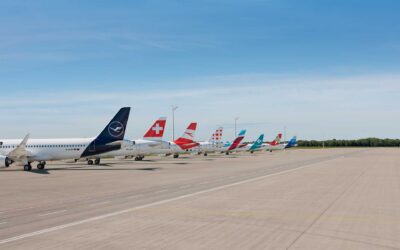
We recently spoke to our friends at Lufthansa Group about their global reach, WiFi powered by Starlink, how they’re celebrating 25 years of PartnerPlusBenefit and so much more, including their expanding SWISS Senses A350 fleet.

5 Questions Every Travel Manager Should be Asking About Service
Service is what ties together the reality of day-to-day travel. It’s also the hardest thing to assess. Every TMC will tell you their service is excellent. So the trick is knowing which questions to ask to get a better gauge on how they stack up. In this article, we give 5 questions that you should have on their list when looking for a new TMC, reviewing an existing partnership, or simply wondering whether you’re getting the very best service for you.
LET’S TALK
Fill in the form below and we’ll get back to you as soon as we can.