
MEXICO CITY: A Business Traveller's Guide
your introduction to the Mexican capital over 2,000ft above sea levelTravelling to Mexico City?
Are you planning on travelling to Mexico City for work? Get to know the the oldest city in the Americas and the country’s capital in this comprehensive guide for business travellers.
From the ancient canals of Xochimilco to the gleaming skyscrapers of Paseo de la Reforma and the Santa Fe business district, Mexico City is a jewel in the crown of the American continent.
As the economic heart of Mexico, the city generates a significant proportion of the country’s GDP and serves as the headquarters for many of Mexico’s largest companies, international corporations, financial institutions, and technology firms. Its strategic location is also perfect for those looking to do business across North and Latin America.
For business travellers, Mexico City is a destination with plenty to offer. Whether it’s attending meetings in Polanco, closing deals in Santa Fe, or enjoying authentic tacos and a tequila after a busy day, the city provides the perfect combination of business and pleasure.
In this comprehensive guide for business travellers, we help you navigate Mexico City’s unique business ecosystem, share practical tips for getting around, and highlight our top 3 things to see or do to make your trip unforgettable.

🇲🇽 Mexico City Factfile
The official coat of arms reflects the city's origins as Tenochtitlan, the ancient Aztec capital founded on an island in Lake Texcoco.
🌤 Average Temperatures
- Summer (Jun–Aug): 24°C (75°F)
- Autumn (Sep–Nov): 20°C (68°F)
- Winter (Dec–Feb): 18°C (64°F)
- Spring (Mar–May): 26°C (79°F)
Getting to Mexico City
BY AIR
“en avión”
Benito Juárez International Airport (MEX) is one of Latin America’s busiest airports and is located approximately 8km (5 miles) east of the city centre. The airport offers direct connections to major cities across North America, Europe, Asia, and South America. Felipe Ángeles International Airport (NLU), situated north of the city, also serves domestic and international routes.
BY RAIL
“en tren”
The Mexico City Metro is one of the largest and busiest rapid transit networks in the world, with 12 lines connecting many of the city’s principal business districts. It is complemented by the Tren Suburbano commuter railway, which links the city centre with municipalities to the north, as well as the modern Cablebús system serving higher-altitude neighbourhoods.
BY ROAD
“por carretera”
Mexico City is connected by an extensive motorway network linking the capital with Guadalajara, Puebla, Querétaro, Monterrey and other major cities. Traffic congestion can be significant throughout the day, particularly during morning and evening rush hours, so travellers should allow additional journey time when attending meetings.
Business Culture & Etiquette
Mexicans are known for their warm and welcoming approach to both their business and personal lives.
Greetings
A firm handshake accompanied by eye contact is the standard greeting. It’s customary to address colleagues and clients using professional titles such as Señor, Señora, or Licenciado (for university graduates or professionals) followed by their surname.
Meetings
Punctuality is appreciated, particularly by international organisations and larger corporations, and visitors should always aim to arrive on time. However, meetings may not always begin exactly as scheduled, and discussions can take a more flexible pace than in some European countries.
Dress Code
Business dress is generally smart and professional. Formal business attire remains the norm in sectors such as finance, law, and government, with dark suits commonly worn for meetings.
Relationships
Personal relationships play a central role in Mexican business culture. Trust, mutual respect, and regular communication are often viewed as the foundation of successful partnerships, meaning decisions may take longer as organisations seek to establish confidence before committing.
💡 Top Travel Tip
Learning a little bit of Spanish can go a long way in building relationships. Even small phrases such as Buenos días (good morning), or Mucho Gusto (nice to meet you) will be appreciated.
Safety & Pratical Advice
Mexico City is generally considered safe for business travellers who take sensible precautions. As with any major global city, visitors should remain aware of their surroundings, particularly at night.
Food & Drink
Tap water in Mexico City is not generally recommended for visitors to drink. Bottled or filtered water is widely available and is provided by most hotels, restaurants, and business venues. It’s also advisable to avoid ice and uncooked foods from street vendors.
Out & About
Tipping is customary throughout Mexico and forms an important part of the hospitality industry. In restaurants, a gratuity of 10% to 15% is generally expected for good service, unless it has already been included in the bill. It’s also common to tip hotel staff, taxi drivers, and tour guides for good service.
Weather
Thanks to its high-altitude location, Mexico City enjoys a mild climate throughout much of the year. Days are typically warm and pleasant, while evenings can become noticeably cooler, particularly between November and February. The rainy season usually runs from May to October, with short but often heavy afternoon showers.
Emergency Services
Mexico’s national emergency number is 911, providing access to police, ambulance, and fire services. English-speaking operators may be available, but it’s not guaranteed.
💡 Top Travel Tip
The unusually high altitude (higher than Mount Everest) can affect some visitors during their first day, so stay hydrated and avoid overexertion… Unless you’re the England football squad.
Best Destinations for Business Travellers
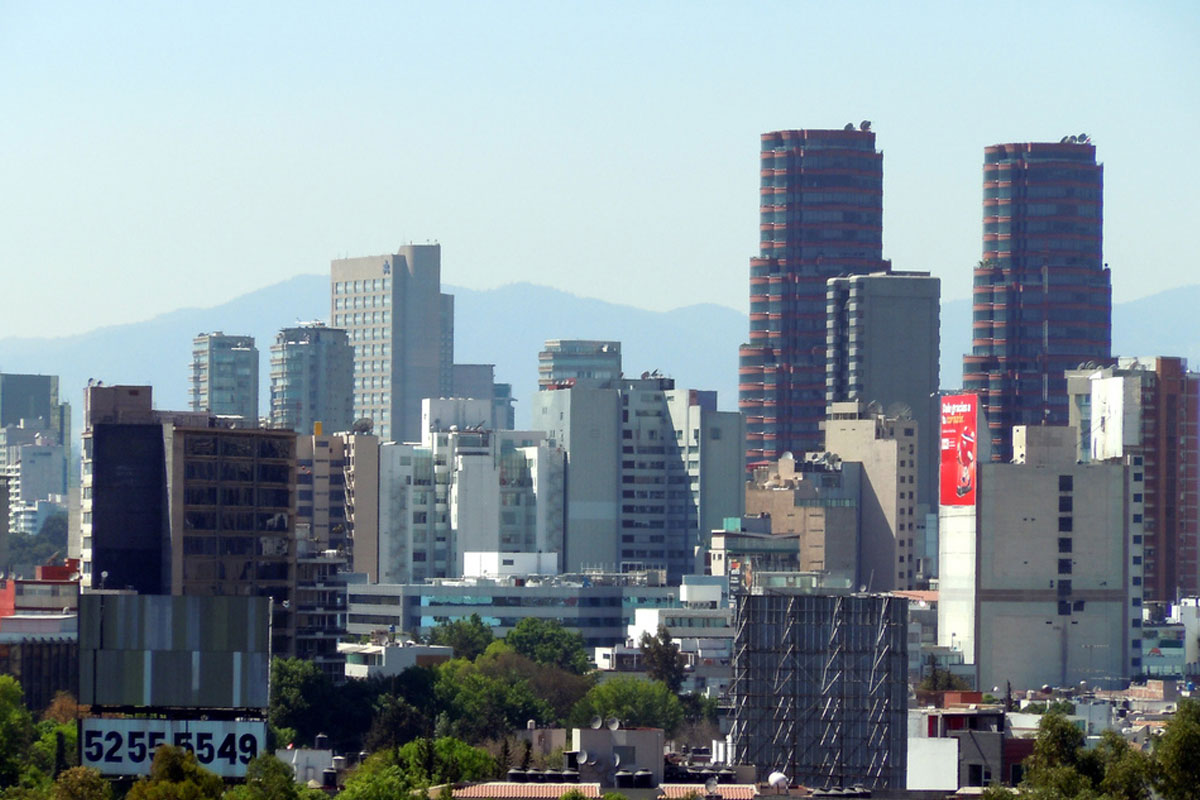
Polanco
Long regarded as one of Mexico City’s most prestigious commercial districts, Polanco is a favourite among international business travellers. Between meetings, business travellers will find an exceptional selection of fine dining restaurants and high-end retailers along Avenida Presidente Masaryk, often referred to as Mexico’s answer to Fifth Avenue.
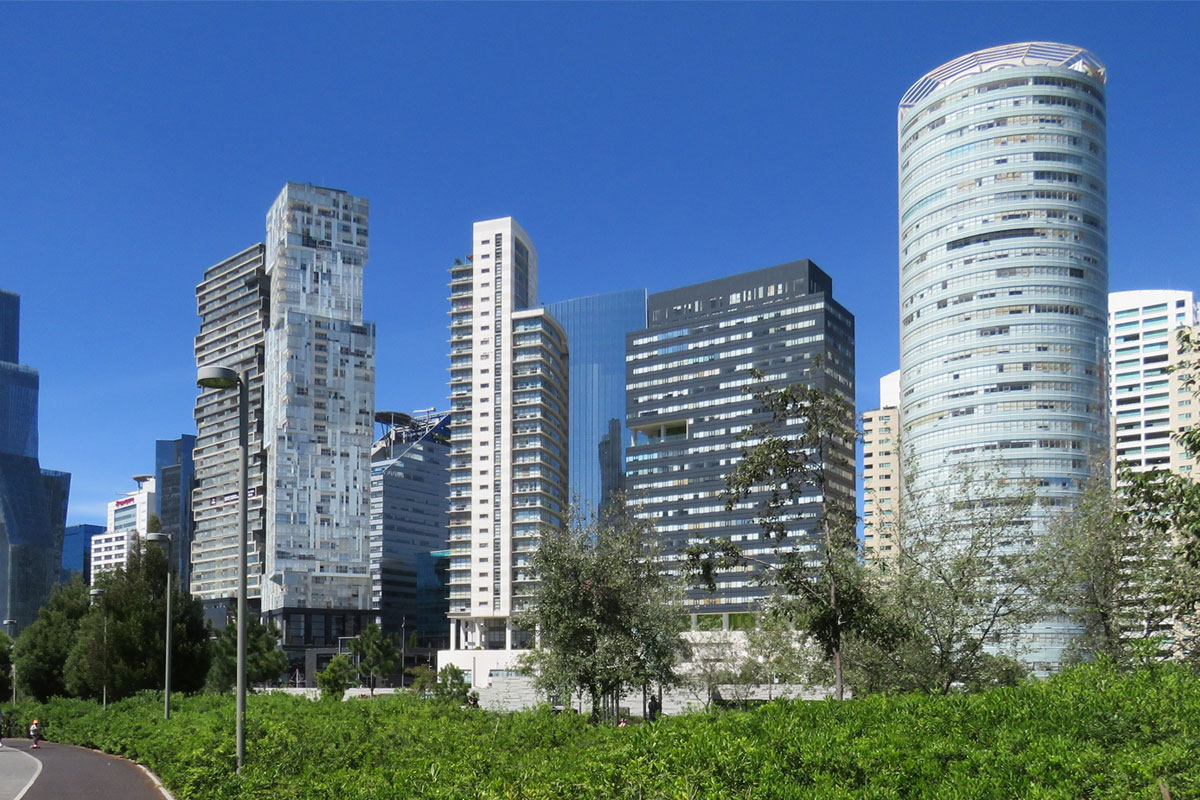
Santa Fe
Purpose-built as a modern business hub, Santa Fe has evolved into one of Latin America’s most important locations. Located in the west of the city, Santa Fe is the place to be for meetings in the district’s corporate campuses and skyscrapers, home to finance, technology, and pharmaceutical industries.
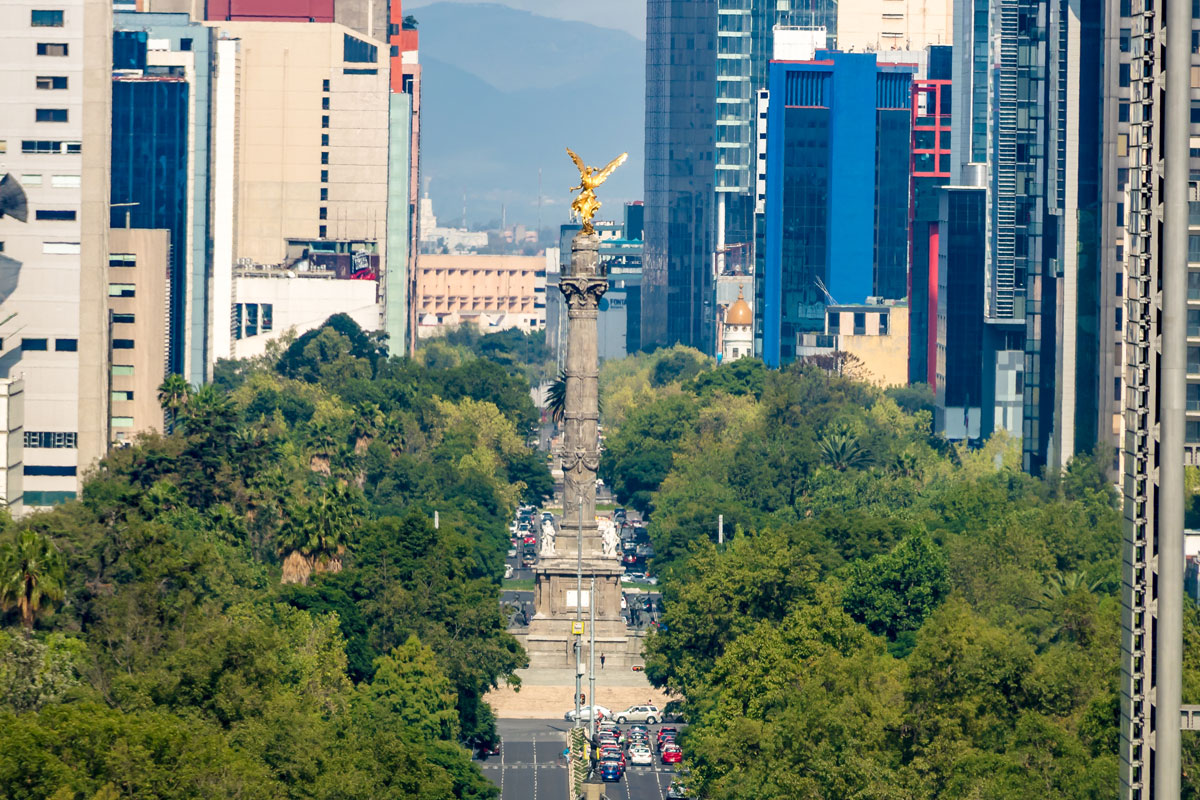
Paseo de la Reforma
Stretching from the Historic Centre towards Chapultepec Park, Paseo de la Reforma’s grand boulevard is lined with landmark office towers, including Torre Mayor and Torre BBVA, making it a key destination for corporate meetings. Its central location also provides convenient access to neighbouring business districts such as Polanco, Juárez and Cuauhtémoc.
How to Get Around the City
Metro
The Mexico City Metro carries millions of passengers each day across its extensive network of 12 lines. Serving many of the city's key business districts, it offers a fast and affordable way to navigate the capital while avoiding its often congested roads. Stations are identified by distinctive symbols as well as names, making the system easier to use for visitors who may not speak Spanish. Business travellers may wish to avoid travelling during peak commuting hours when trains and platforms can become extremely busy.
Metrobus
The Metrobus is a bus rapid transit (BRT) system that operates on dedicated lanes along many of Mexico City's major avenues, including Paseo de la Reforma and Avenida de los Insurgentes. Its segregated routes help avoid much of the city's notorious traffic, making it a reliable option for travelling between business districts and popular neighbourhoods.
Taxi & Ride-Hailing
Authorised taxis and ride-hailing platforms such as Uber, DiDi and Cabify are widely available throughout Mexico City. Given the city's size and frequent traffic congestion, journey times can vary considerably, so it's advisable to allow extra time for appointments, particularly during the morning and evening rush hours. When using traditional taxis, visitors should choose authorised airport taxis or licensed vehicles rather than hailing one directly from the street.
Top 3 Things to See or Do in Mexico City
1. Centro Histórico
At the heart of Mexico City lies the Centro Histórico, a UNESCO World Heritage Site that offers a fascinating glimpse into the country’s rich cultural and architectural heritage.
Built on the ruins of the ancient Aztec capital of Tenochtitlan, the district is home to some of Mexico’s most iconic landmarks, including the impressive Metropolitan Cathedral, the National Palace, and the bustling Zócalo, one of the largest public squares in the world. Visitors can also explore the remains of the Templo Mayor.
2. Chapultepec Park
Covering more than 1,700 acres, Chapultepec Park is one of the largest urban parks in the world. It’s also home to Chapultepec Castle, several lakes, botanical gardens, walking trails, and some of the country’s most important cultural institutions, including the National Museum of Anthropology and the Museum of Modern Art.
The area offers a peaceful retreat from the city’s bustling streets, all just minutes from the main business districts such as Polanco and Paseo de la Reforma.
3. National Museum of Anthropology
Consistently ranked among the world’s finest museums, the National Museum of Anthropology provides an ntroduction to Mexico’s indigenous cultures and civilisations.
Its extensive collection spans thousands of years of history, with galleries dedicated to the Aztec, Maya, Olmec and other pre-Hispanic peoples. Highlights include the world-famous Aztec Sun Stone and beautifully preserved archaeological treasures from across the country
Discover Mexico City…
Home to more than 20 million people, Mexico City is one of the world’s great capitals, defined by a rich cultural heritage and outstanding links to the Latin American market.
For corporate travellers, the capital of Mexico has a boundless energy that few cities can rival. Morning meetings in the glass towers of Santa Fe or along Paseo de la Reforma can easily give way to an afternoon exploring centuries-old architecture or an evening eating tacos al pastor at a traditional restaurant in Polanco.
Mexico City is also ripe with opportunities to do business across Latin America. The city accounts for 15.8% of the country’s GDP, a figure that’s equivalent to $340.8 bn (as of 2023), a huge number that would make it the 5th largest economy in South America if the city were a country. This is largely due to its thriving finance, banking, and technology industries, including major companies such as HSB Mexico and the Mexican HQ of Google.
City Guides
Milan: A Business Traveller’s Guide
Considered by many as one of the fashion capitals of the world – unsurprising when you consider it’s home to luxury brands including Prada, Armani, and Dolce & Gabbana – it can be easy to overlook Milan as just a place for those in the business of clothes and catwalks. In this comprehensive guide for business travellers, we help you navigate Milan’s unique business ecosystem, share practical tips for getting around, and highlight our top 3 things to see or do to make your trip unforgettable.

Auckland: A Business Traveller’s Guide
Known as Tāmaki Makaurau (‘Tāmaki desired by many’) in the nation’s indigenous Māori language, Auckland sits on the pointed tip of New Zealand’s northern island, nestled between the Pacific Ocean and the Tasman Sea. Many of the world’s leading organisations with dealings in Oceania own an office in the Auckland Central Business District (CBD), particularly those invested in finance, commerce, and tourism – the largest markets in the area. In this comprehensive guide for business travellers, we help you navigate Auckland’s unique business ecosystem, share practical tips for getting around, and highlight our top 3 things to see or do to make your trip unforgettable.

Johannesburg: A Business Traveller’s Guide
Nestled on the high plateau of the Highveld region, some 1,700 m above sea level, Johannesburg (often called Jo’burg or Jozi) is South Africa’s economic powerhouse. Founded in 1886 following the gold rush, it quickly grew into a magnet for commerce, drawing people from across the continent. In this guide, we take you through navigating Johannesburg’s unique business ecosystem, share practical tips for getting around, and highlight our top 3 things to see or do to make your trip unforgettable.