
7 of the Most Memorable Hotels From TV and Film
An article from the Screenshot Podcast from BBC Radio 4The following article was written and published by the Screenshot podcast on the BBC Radio 4 website.
In real life, hotels are usually just somewhere to stay when you’re on holiday, but in movies and TV, they’re often mysterious places where wonderful, weird or sometimes downright terrifying things happen
In BBC Radio 4’s Screenshot, Ellen E Jones and Mark Kermode are packing their bags and going on a journey to understand why hotels are such rich ground for screen storytelling.
“In hotels, you can pretend to be something else,” says Ellen. For some, that’s imagining life as a carefree person of infinite wealth, like the amoral residents of The White Lotus. But for others, it’s a place where your demons and other forces can catch up with you and possess you, literally in the case of The Shining’s iconically scary Overlook Hotel.
Come this way as we guide you through some of the most memorable hotels on screen. Check-out is 11am.
1. The White Lotus
For three seasons, Mike White’s hit show has used luxury hotels to explore the peculiar lives lived by very, very wealthy people. He puts them all in the same place – somewhere they’re encouraged to embrace their most spoiled, entitled impulses – and then examines them like mice in a lab.
He’s fascinated by people who think they’re above the mere mortals but have all the same insecurities and frailties as the rest of us (and often less ability to deal with them). As film writer Hannah Strong says: “Just because you’re in a different tax bracket does not exempt you from petty grievances.”
2. Psycho
Alfred Hitchcock’s 1960 classic is perhaps the ultimate in hotel horror. When woman-on-the-run Marianne Crane (Janet Leigh) checks into The Bates Motel, it’s everything you don’t want in overnight lodging: remote, grubby and virtually deserted – except for meek owner Norman (Anthony Perkins).
“There is something uniquely scary about [rundown hotels],” says Anne Bilson. Hitchcock’s use of the motel/hotel setting adds massively to the fear of the situation. Crane’s in a strange environment and can’t escape the feeling she’s being watched. Which, of course, she is, leading to one of the most frightening and famous murder scenes in history.
Image credit: Diego Delso, delso.photo, License CC BY-SA
3. Fawlty Towers
Speaking of scary, film critic Anne Bilson says: “It would not take much for [Fawlty Towers] to be a horror series.” Set in a Torquay guest house, John Cleese and Connie Booth’s 1970s sitcom is ostensibly about a harried hotel owner, Basil Fawlty (Cleese), being driven to fury by useless staff and ridiculous guests with petty problems.
Fawlty is a man who seems to resent the notion of anyone wanting to stay in his hotel and the prospect of having to serve anyone. It’s not a huge leap to imagine him snapping in more frightening fashion.
Image credit: “Fawlty Towers” by Insomnia Cured Here, CC BY-SA 2.0
4. Grand Hotel
The idea of a hotel as its own private universe is very well explored in the glamorous 1932 movie Grand Hotel. The writer Wendy Ide once described hotels as “hermetically sealed worlds of privilege”, and that’s just what we see here.
A group of wealthy individuals, including a dying man (Lionel Barrymore) who wants to spend his remaining money living in luxury and a ballerina who just wants to be alone (Greta Garbo (left) in one of her most iconic, and often quoted roles). All their stories intersect as they’re all transformed by their time in this peculiar place.
AT GRAY DAWES, WE’RE EXPERTS IN HOTELS…
With over 1,000,000 accommodation choices, designed to suit any business, policy and budget need, Gray Dawes are perfectly placed to build a tailored and comprehensive hotel programme which works for you.
5. Grand Budapest Hotel
Wes Anderson’s very stylish, very charming 2014 comedy takes place in a palatial hotel in the fictional country of Zubrovka. It’s set against the collapse of a fascist regime and reinforces the idea of luxury hotels as places where uncouth outside world events can be forgotten.
People who might be placed in front of a firing squad if they stepped outside can continue to swan about as if nothing can touch them. In the very best hotels, time is almost frozen. Ralph Fiennes is a hoot as the concierge who’s framed for the murder of a wealthy dowager (Tilda Swinton).
Image credit: Rolf Dietrich Brecher at Flickr
6. Lost in Translation
Writer Hannah Strong calls Sofia Coppola “the queen of lonely hotels”. In 2003’s Lost in Translation, she uses a hotel to dreamy effect. An isolated woman (Scarlett Johansson), tagging along on her husband’s work trip, and a bored celebrity (Bill Murray) find connection in a grand Japanese hotel, in a city neither knows nor understands.
Coppola uses the hotel as a self-contained world, somewhere these two are cut off from reality, just for a bit. When the film ends, they go back to their old lives and the bubble of their alternate life is burst. Coppola returned to hotels for 2010’s Somewhere, about an actor (Stephen Dorff) experiencing an existential crisis in a hotel. Not a fan, Mark Kermode described this one as “like watching paint dry”.
Image credit: “View from Tokyo Opera City” by Ashley, CC BY-NC-ND 2.0
7. The Shining
If hotels are each their own world, Stanley Kubrick’s masterful 1980 horror The Shining asks ‘what if you couldn’t escape that world’? Jack Nicholson plays Jack Torrance, a wannabe novelist, who takes a caretaker job in the remote Overlook Hotel in a brutal winter. Isolation and the ghosts of the hotel start to take a toll on his sanity and put his wife (Shelley Duvall) and son (Danny Lloyd) in extreme danger.
Rodney Asher, director of Room 237, a documentary about The Shining, says everything about Kubrick’s planning, from the seemingly shifting geography of the hotel to the way he shoots it, is designed to make you feel lost and afraid. “There was something about the frictionless way the Steadicam was winding through the hallways that made me feel like I was being pulled into the centre of a very bad place against my will,” he says. You may willingly check into The Overlook, but you’ll never leave.
Related Articles

Getting the Most from Procurement Portals When Selecting Your TMC
Procurement portals are now a common way to run Travel Management Company RFPs, offering structure and consistency for procurement teams. But when portals are poorly configured, they can unintentionally limit supplier responses, create unnecessary friction, and make it harder to assess what truly differentiates one TMC from another.
Based on extensive experience responding to portal-based RFPs, this guide from Gray Dawes Travel shares nine practical ways travel managers and procurement leads can attract higher-quality responses, improve evaluation, and achieve better outcomes from the process.
Work Stays Made Easy
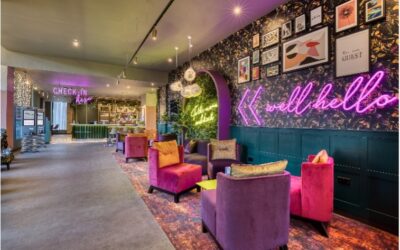
As winter fades and brighter days arrive, it’s the perfect time to plan ahead for a successful season of business travel. With over 800 Premier Inn hotels across the UK, you’re always close to your next meeting, conference, or event. From city centres to business hubs, enjoy convenient locations, comfy beds, blackout curtains for great sleep, and the option to upgrade to Premier Plus for extra comfort. Start your day with an unlimited breakfast, wind down with delicious on-site dining, and save with meal deals. Book early for the best value, flexibility, and stress-free stays wherever work takes you.

What to Do if Your TMC is Acquired
When your travel management company is acquired, the impact goes far beyond industry headlines. From technology changes and service disruptions to pricing uncertainty and contract implications, a merger can fundamentally reshape your corporate travel programme. This guide helps travel managers understand what’s really changing, the critical questions to ask their TMC, and how to assess whether staying or exploring alternatives makes the most strategic sense. With a clear framework for evaluating technology, service, costs, and stakeholder needs, you’ll be better equipped to protect programme value and move forward with confidence.