
Traveling to London?
Are you planning on traveling to London for work? Get to know one of the world’s major cities in this comprehensive guide for business travelers.
First established as a major settlement by the invading Romans nearly 2000 years ago in AD 47 (as Londinium), London has survived Viking assaults and fierce civil war to emerge largely unscathed as Britain’s largest and most celebrated city.
Old streets rich with history duck and weave between new roads that pulse with the sound of modern business – from the skyscrapers of Canary Wharf to the bustling high-street shops of Oxford Street, there’s no shortage of opportunities for corporate travelers.
The numbers speak for themselves. In 2023, London’s GDP was ~£618 billion (22.3% of the UK’s total) and over 70% of companies in the FTSE 100 have offices in the city. What’s more, London is the world’s biggest currency trading center, accounting for 37% of the $5.1 trillion average daily volume worldwide.
In this comprehensive guide for business travelers, we help you navigate London’s unique business ecosystem, share practical tips for getting around, and highlight our top 3 things to see or do to make your trip unforgettable.
London Fact File
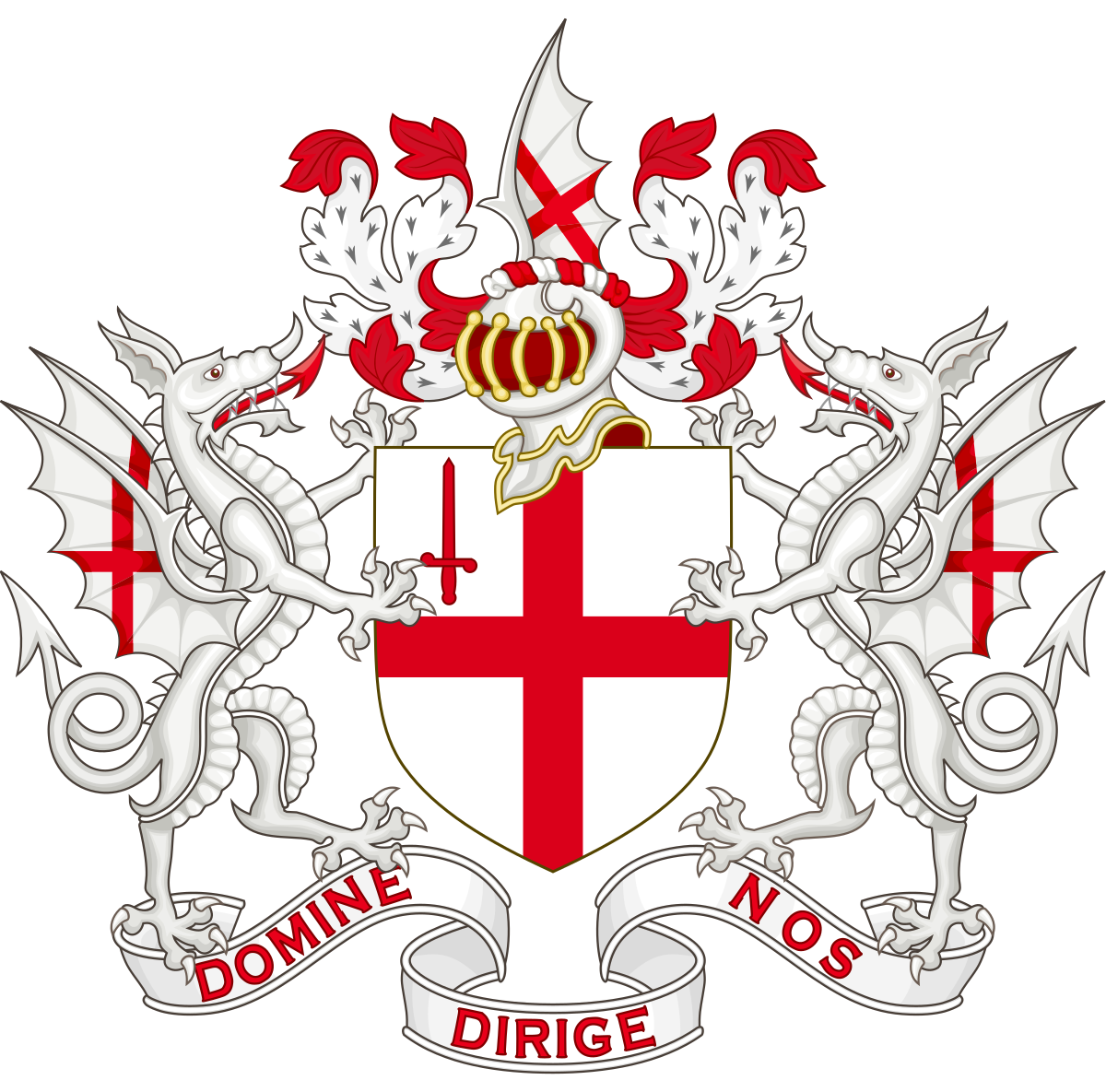
The London coat of arms, featuring the Latin for "Lord, Guide Us".
- Summer (Jun–Aug): 21°C (70°F)
- Autumn (Sep–Nov): 13°C (55°F)
- Winter (Dec–Feb): 5°C (41°F)
- Spring (Mar–May): 11°C (52°F)
Getting To London
By Air
London is served by a network of major international airports. Heathrow Airport (LHR), the UK’s largest and busiest airport, lies around 15 miles (24 km) west of central London. From here, visitors can reach the city center via the Heathrow Express, which links directly to Paddington Station, or by using the London Underground’s Piccadilly line.
Gatwick Airport (LGW), located 28 miles (45 km) south of the capital, is an alternative option. The Gatwick Express connects the airport to London Victoria, while Thameslink services offer direct routes to London Bridge, Blackfriars, and St Pancras.
By Road
Approaching from the west, the M4 provides a direct route into London, feeding into areas such as Kensington and Hammersmith. From the north, the M1 joins the North Circular Road (A406) which links to north and west London. Those driving from the south can follow the M23, which connects to the A23 for a direct approach into central London, while the M3 offers an alternative route into the southwest of the city.
Surrounding the city, the M25 orbital motorway is the main way to navigate around London without having to cut through the center.
By Rail
From the north, trains enter London via King’s Cross or Euston stations, both offering quick Underground links across London.
From the west, long-distance services terminate at London Paddington, with onward connections via the Elizabeth line.
Routes from the south of England arrive at stations such as Victoria, London Bridge, and Waterloo, while those travelling from the east or southeast will generally reach London Liverpool Street or St Pancras International.
Business Culture & Etiquette
One of the biggest challenges for newcomers to London – and the UK more broadly – is adapting to the subtle and understated way in which British people communicate.
Direct statements are often softened with phrases like “perhaps”, or “a bit,” while criticism is often delivered indirectly (“You might want to consider…”). Humor is often dry and self-deprecating, even in professional settings, and is usually a social “glue” rather than a sign of informality.
Small talk about the weather or weekend plans is often used as a conversation starter. After-work socializing, particularly “going for a pint,” can be a common way to strengthen professional relationships outside of the office.
Culturally, business culture in London is similar to the rest of the Western world. Suits and ties are commonly worn, especially in industries such as finance and law, with punctuality and politeness in meetings highly valued. Courtesy is everywhere too: saying “please,” “thank you,” and “sorry” (even for small inconveniences) is part of the cultural rhythm.
A Few Other Business Etiquette Top Tips
- Standing too close can feel intrusive, and cutting in line is considered extremely rude. Queuing properly (and patiently) is essential.
- Handshakes are common, but hugs or cheek kisses are usually reserved for friends and not typically used when meeting someone new.
- Compliments are appreciated, but excessive flattery can feel insincere. Brits are generally reserved, and a simple, polite remark is usually enough.
Crime & Safety
While London is generally a safe country for business travelers, non-violent property crimes – including theft, pickpocketing, and shoplifting -have more than doubled, rising from approximately 53,700 in 2019 to over 103,900 in 2025. It is therefore important to stay vigilant in high-traffic or tourist areas such as Oxford Street, Westminster, or around major Underground stations during rush hour.
Despite this, the city has a strong policing presence, and most areas, especially central business districts such as the City of London and Canary Wharf, are well-patrolled. Violent crime rates are relatively low compared with other major cities, though caution is advised in certain areas and at night.
Air quality in London is also improving. In the latest data from 2023, London’s roadside nitrogen dioxide (NO₂) levels fell by nearly half since 2016. In fact, 2023 was the first year on record when London’s air‑quality monitoring sites did not exceed the guidelines from the World Health Organization (WHO).
A Few Other Crime & Safety Tips
- 999 is the emergency number in London and in the rest of the UK. For non-urgent police matters, 101 is the standard number.
- Stick to licensed black cabs or reputable rideshare apps rather than unlicensed taxis, especially late at night.
- In London, cars drive on the left-hand side of the road.
Getting Around London
By London Underground
The London Underground (or “Tube”) network spans 11 lines, connecting the city’s neighborhoods. Trains run frequently, typically every 2-5 minutes during peak hours. Using an Oyster card or contactless payment is the preferred method of paying for a ride on the Underground, with route planning made easy by using the official Transport for London (TfL) app.
By Bus
The city has an extensive network of routes covering central areas and suburbs, often reaching places the Underground does not. Buses run frequently, and night buses ensure transport options even after the Tube closes. Payment is simple with an Oyster card, contactless card, or mobile payment, and most stops display route maps and real-time arrival information
By Taxi & Rideshare
Black cabs are easily recognizable and can be hailed on the street or at designated taxi ranks; drivers are highly trained and must pass the famous “Knowledge of London,” navigation test. Private hire vehicles (such as Uber and other app-based services) must be pre-booked and offer a wider range of vehicle options, often at competitive prices.
Top 3 Things to See or do in London
If you find yourself with a bit of free time on your business trip, London is a city with a rich history and offers plenty to see and do. Here are our top 3 recommendations…
1. The British Museum
The British Museum is one of the world’s great treasure troves, an architectural marvel filled with the stories of human history. Its grand, glass-roofed Great Court houses a millennia of art, culture, and archaeology, including masterpieces such as the Rosetta Stone and the Parthenon sculptures. Entry to the permanent collections is also free, though special exhibitions or tours will be charged.
2. Tower of London
For nearly a thousand years, the Tower of London has weathered political intrigue, high-profile imprisonments, and executions that shaped the nation. Today, its ancient stone walls echo with stories told by the Yeoman Warders (or Beefeaters) as ravens hop along the battlements. The fortress also houses the Crown Jewels, the glittering centerpiece for generations of pomp and ceremony.
3. Leadenhall Market
Leadenhall Market is a beautifully preserved Victorian marketplace nestled between the soaring skyscrapers of the city. Its ornate ironwork, glass canopies, and cobblestone walkways sit at the crossroads of where old London and new London meet – the perfect place for an afternoon wander through time. Film buffs may recognize Leadenhall from the movies, having appeared in Harry Potter (as the location of the Leaky Cauldron), Tinker, Tailor, Soldier, Spy, and Lara Croft: Tomb Raider, to name but a few.
It’s also just around the corner from Gray Dawes Travel’s London office, so why not pop in and say “hello”?
Discover London, an Ancient City with a Booming Business Heart.
London is one of the world’s most rewarding destinations for business travel, blending centuries of heritage with a thriving corporate scene. Whether you’re travelling for a conference in Canary Wharf, or exploring partnerships in Shoreditch’s tech hub, there really is something for everyone in the UK’s sprawling capital
Yet London offers something that sets it apart from just another business destination. A morning spent hammering out contract details in a boardroom can quickly transition into an afternoon exploring the architectural grandeur of Leadenhall Market or walking the same stones where monarchs and prisoners once trod at the Tower of London.
Navigating the London business world is all about building genuine connections and appreciating the nuanced dance of British humor and way of speaking. So, whether this is your first visit or your fiftieth, London remains a place that offers plenty of opportunities and countless rewards for business travelers from all industries and walks of life.
City Guides

Tokyo: A Business Traveler’s Guide
From the moment you step off the plane, Tokyo announces itself as somewhere unlike anywhere else on earth. From trains that arrive to the second and immaculate streets to a unique business culture built on hierarchy and respect, the capital of Japan is an iconic business travel destination. It is also a city of contrasts. Ancient Shinto shrines stand in the shadows of gleaming skyscrapers, and centuries-old tea ceremonies take place just streets from the Tokyo Stock Exchange. In this comprehensive guide for business travellers, we help you navigate Tokyo’s unique business ecosystem, share practical tips for getting around, and highlight our top 3 things to see or do to make your trip unforgettable.

Milan: A Business Traveller’s Guide
Considered by many as one of the fashion capitals of the world – unsurprising when you consider it’s home to luxury brands including Prada, Armani, and Dolce & Gabbana – it can be easy to overlook Milan as just a place for those in the business of clothes and catwalks. In this comprehensive guide for business travellers, we help you navigate Milan’s unique business ecosystem, share practical tips for getting around, and highlight our top 3 things to see or do to make your trip unforgettable.

Auckland: A Business Traveller’s Guide
Known as Tāmaki Makaurau (‘Tāmaki desired by many’) in the nation’s indigenous Māori language, Auckland sits on the pointed tip of New Zealand’s northern island, nestled between the Pacific Ocean and the Tasman Sea. Many of the world’s leading organisations with dealings in Oceania own an office in the Auckland Central Business District (CBD), particularly those invested in finance, commerce, and tourism – the largest markets in the area. In this comprehensive guide for business travellers, we help you navigate Auckland’s unique business ecosystem, share practical tips for getting around, and highlight our top 3 things to see or do to make your trip unforgettable.