
Travelling to Tokyo?
Are you planning on travelling to Tokyo for work? Get to know one of the world’s most sprawling cities in this comprehensive guide for business travellers.
Founded as Edo in the 12th century and renamed Tokyo (meaning ‘Eastern Capital’) in 1868 when it became the seat of the Meiji Emperor, Tokyo has transformed from a feudal castle town into one of the most technologically advanced and economically powerful cities on the planet.
The contrast is immediately striking: ancient Shinto shrines stand in the shadows of gleaming skyscrapers, and the meditative calm of a traditional tea ceremony exists just streets away from the relentless pace of the Tokyo Stock Exchange. For the business traveller, this duality makes Tokyo both fascinating and uniquely productive.
The numbers are formidable. Tokyo’s GDP exceeds $1 trillion, making it one of the largest metropolitan economies in the world. The Tokyo Stock Exchange is Asia’s largest, and Japan is home to more Fortune 500 companies than any country outside the United States – the majority of which maintain their headquarters or key offices in the capital.
In this comprehensive guide for business travellers, we help you navigate Tokyo’s unique business ecosystem, share practical tips for getting around, and highlight our top 3 things to see or do to make your trip unforgettable.
Tokyo Fact File
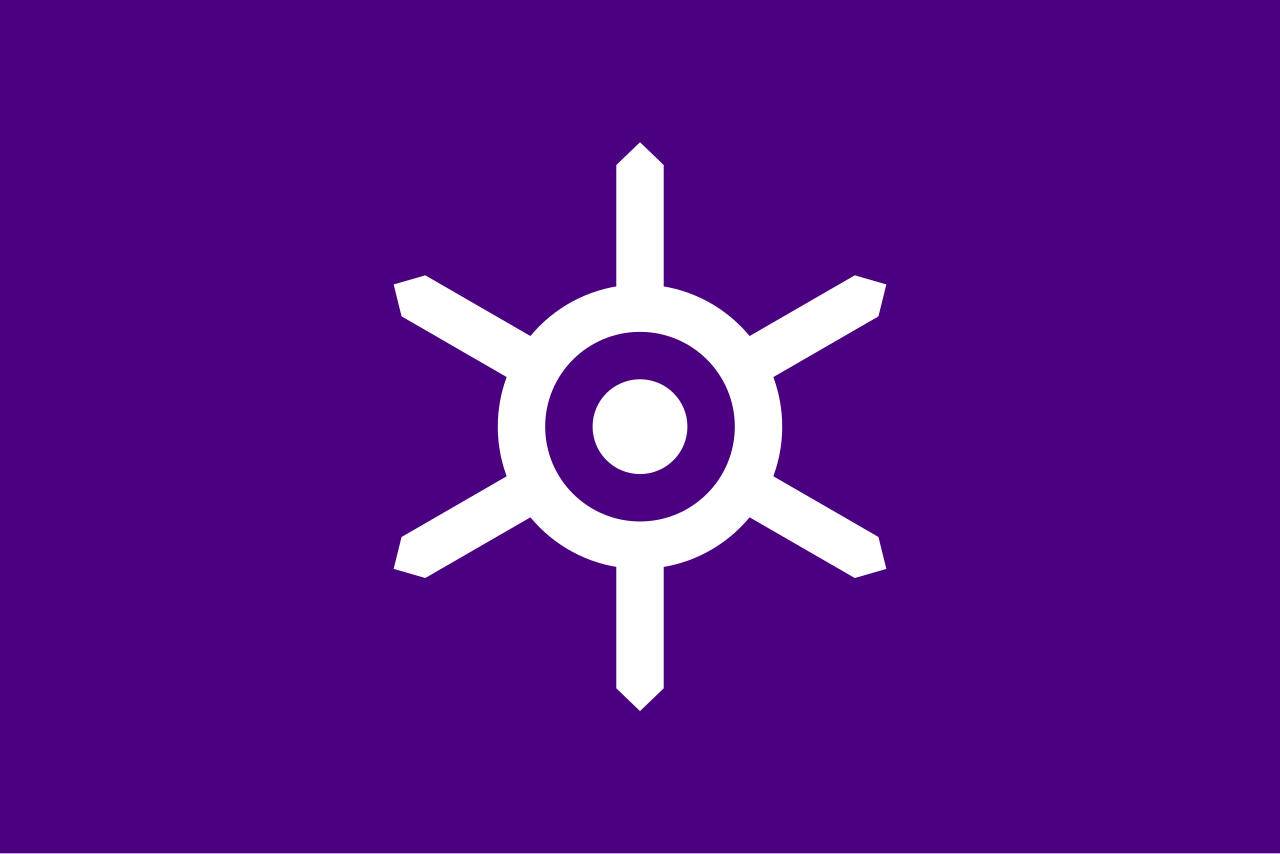
The flag of Tokyo, featuring a white metropolitan symbol.
- Summer (Jun–Aug): 30°C (86°F)
- Autumn (Sep–Nov): 20°C (68°F)
- Winter (Dec–Feb): 6°C (43°F)
- Spring (Mar–May): 15°C (59°F)
Getting To Tokyo
By Air
“Hikōki de”
飛行機で
Tokyo is served by two major international airports. Narita International Airport (NRT), located approximately 60 km east of central Tokyo in Chiba Prefecture, is the main hub for long-haul international flights. From Narita, business travellers can reach the city via the Narita Express (N’EX), which runs directly to Shinjuku, Shibuya, and Yokohama.
Haneda Airport (HND) sits just 9 miles (14 km) south of central Tokyo and handles a growing number of international routes alongside its heavy domestic schedule. Its proximity to the city makes it the preferred airport for many business travellers, with the Tokyo Monorail and Keikyu Line offering connections to central business districts in under 30 minutes.
By Road
“Kuruma de”
車で
While Tokyo’s expressway network is extensive, road travel into the city is generally not recommended for business travellers.
Traffic congestion is often severe, particularly on arterial routes such as the Metropolitan Expressway, and parking is limited and expensive. If ground transport is required, a private car or corporate taxi is strongly preferable to self-driving.
By Rail
“Densha de”
電車で
Japan’s Shinkansen (bullet train) network makes Tokyo easily accessible from other major Japanese cities.
Travellers from Osaka, Kyoto, and Nagoya arrive at Tokyo Station via the Tokaido Shinkansen in under three hours – a journey that renders domestic flights largely redundant. Those travelling from Sapporo in the north arrive at Shinjuku or Ueno via the Hokuriku and Tohoku Shinkansen lines.
Business Culture & Etiquette
Doing business in Tokyo requires a genuine understanding of Japanese professional culture and a willingness to adapt. The differences from Western business norms are significant, and the effort you make to respect Japanese etiquette will be noticed and deeply appreciated.
The concept of wa (harmony) underpins almost every professional interaction. Conflict and overt disagreement are avoided; a polite “that would be difficult” almost always means no.
Hierarchy is taken seriously, and it is important to understand the seniority structure within a company before any meeting. Decisions are rarely made by a single person; instead, they emerge from a collective consensus-building process known as ringi-sho, which can mean timelines move more slowly than Western counterparts might expect.
Business cards (meishi) are exchanged as a near-ceremonial ritual. Present your card with both hands and a slight bow, ensuring the text faces the recipient. Receive cards with the same care and take a moment to read the information before placing it respectfully on the table in front of you. Never write on a business card or shove it into a back pocket.
A Few Other Business Etiquette Top Tips
- Punctuality is non-negotiable. Arriving even a few minutes late to a meeting is considered disrespectful. Plan your route with time to spare.
- Bowing is the standard greeting. A slight bow of acknowledgement is appropriate for most business settings; leave deeper bowing to your Japanese counterparts and follow their lead.
- Gift-giving is customary, particularly when visiting a company for the first time. A quality item from your home country, tastefully wrapped, is always well received.
Crime & Safety
Tokyo is one of the safest major cities in the world, and business travellers can move around with a high degree of confidence at almost any hour.
Violent crime rates are exceptionally low, and petty theft, while not entirely unknown, is rare by global standards. Lost property is frequently handed in; it is entirely commonplace for items left on trains or in taxis to be returned intact.
That said, a few practical precautions are always sensible. Japan sits in one of the world’s most seismically active zones, and minor earthquakes are not uncommon in Tokyo. Familiarise yourself with your hotel’s earthquake procedures on arrival, and note that Japan has an exceptionally well-organised emergency response infrastructure. Natural disasters – including typhoons between June and October – are taken seriously, and official government alerts are widely communicated.
A Few Other Crime & Safety Tips
- 110 is the police emergency number in Japan. 119 covers fire and ambulance services.
- English signage is widely available in central Tokyo and major transport hubs, but English proficiency among the general public is variable. A translation app such as Google Translate (with the camera function for reading menus and signs) is an invaluable travel companion.
- Japan drives on the left-hand side of the road. Be especially vigilant at pedestrian crossings.
Getting Around Tokyo
By Tokyo Metro & JR Lines
“Tōkyō Metoro de”
東京メトロで
Tokyo’s rail network is arguably the finest urban transit system in the world, and it is the definitive way to get around the city. The network is operated by multiple providers, principally Tokyo Metro, Toei Subway, and JR East, and covers virtually every major district.
A Suica or Pasmo IC card functions as a contactless payment card across almost all rail services. Trains run with extraordinary punctuality. Delays of more than a minute or two are genuinely newsworthy events. Services typically run from around 5:00am to midnight, after which late-night taxis become the primary option.
By Bus
“Basu de”
バスで
Tokyo’s bus network is comprehensive but considerably more complex to navigate than the rail system, particularly for non-Japanese speakers. Routes are operated by several providers – most notably Toei Bus, which covers much of central Tokyo – alongside numerous suburban and ward-operated services.
For most business travel between central districts, the Metro and JR lines will be both faster and simpler. This is especially true when one considers traffic congestion in central Tokyo, particularly during morning and evening peaks.
By Taxi & Rideshare
“Takushī de”
タクシーで
Tokyo’s taxis are clean, reliable, and driven by uniformed, white-gloved drivers of impeccable professionalism. They are also expensive. Taxi doors open and close automatically – do not attempt to open or close them yourself. Most drivers speak limited English, so having your destination written in Japanese (or saved in Google Maps) is strongly recommended.
Ride-hailing via GO (the dominant app in Japan) or Uber is available in Tokyo, though taxi apps are far more common than private hire vehicles. Corporate accounts are widely supported.
Top 3 Things to See or do in Tokyo
If you find yourself with a bit of free time on your business trip, Tokyo is a city built for exploration and offers plenty to see and do. Here are our top 3 recommendations…
1. Senso-Ji Temple, Asakusa
浅草寺
Tokyo’s oldest and most visited temple, Senso-ji, sits in the atmospheric Asakusa district and offers a remarkable window into Japan’s cultural and spiritual heritage. Approach via the famous Nakamise shopping street – a covered arcade lined with vendors selling traditional crafts, foods, and souvenirs – and emerge beneath the iconic Kaminarimon (Thunder Gate) lantern into the temple precinct beyond.
Senso-ji is a living religious site, not merely a tourist attraction, and that authenticity makes it all the more extraordinary. An early morning visit before the crowds arrive is particularly recommended.
2. teamLab Planets, Toyosu
チームラボ プラネッツ
For an experience that is distinctly “Tokyo”, teamLab Planets in Toyosu is unlike anything else in the world. This vast interactive digital art museum immerses visitors in a series of extraordinary environments – rooms filled with floating light, infinite mirror spaces, and sensory landscapes that blur the boundary between reality and art.
It has become one of Tokyo’s most talked-about attractions for good reason, and it makes for a genuinely memorable client entertainment option or an unforgettable solo evening. Booking well in advance is essential.
3. The Observation Deck at Tokyo Skytree
東京スカイツリー展望台
At 634 metres, the Tokyo Skytree is the tallest structure in Japan and offers one of the great urban panoramas on Earth. On a clear day, particularly in winter, when visibility is at its finest, the views across the vast Tokyo conurbation extend all the way to Mount Fuji on the western horizon.
The observation decks at 350m and 450m give a real sense of Tokyo’s extraordinary scale: a city of 14 million people stretching to the horizon in every direction.
Discover Tokyo…
Tokyo is not just one of the world’s great business destinations; it is one of the world’s great cities, full stop.
The combination of deep cultural richness and an unmatched commitment to quality in everything from infrastructure to cuisine makes every visit genuinely memorable.
The challenges are real: navigating a language barrier, adapting to the nuances of Japanese business etiquette, and managing the sheer scale of the city all require preparation. But the rewards are proportionate. Tokyo’s business culture, once understood, is built on foundations of integrity, long-term relationship building, and a collective pursuit of excellence that aligns naturally with the goals of any serious corporate traveller.
Whether you are negotiating a partnership in Marunouchi or exploring Japan’s burgeoning tech sector in Shibuya’s Bit Valley, Tokyo will leave you eager to return.
City Guides

Amsterdam: A Business Traveller’s Guide
Are you planning on travelling to Amsterdam for work? In this comprehensive guide to the Dutch capital for business travellers, we delve deeper into navigating the city’s unique corporate landscape, offer our top tips for getting around, and pick out our top 3 things to see or do to make your trip unforgettable.
San Francisco: A Business Traveller’s Guide
Are you planning on travelling to San Francisco for work? In this comprehensive guide to San Francisco for business travellers, we delve into navigating the city’s unique corporate landscape, offer our top tips for getting around, and pick out our top 3 things to see or do to make your trip unforgettable.

Seoul: A Business Traveller’s Guide
Are you planning on travelling to Seoul (서울) for work? In this comprehensive guide to the city for business travellers, we delve deeper into navigating the city’s unique corporate landscape, offer our top tips for getting around, and pick out our top 3 things to see or do to make your trip unforgettable.