
SAF stands for Sustainable Aviation Fuel and is a type of aviation fuel that is produced from renewable resources such as wood chips, agricultural waste, or other biomass. It is designed as an alternative to traditional fossil fuel-based aviation fuels and is considered to be greener because it has a lower carbon footprint compared to traditional aviation fuels.
In this blog, we will explore exactly what SAF is, how it is produced, and debate the environmental impact of using SAF for business travel. We’ll finish with an analytical assessment from Gray Dawes’ own Director of Account Management, Ian Currington.
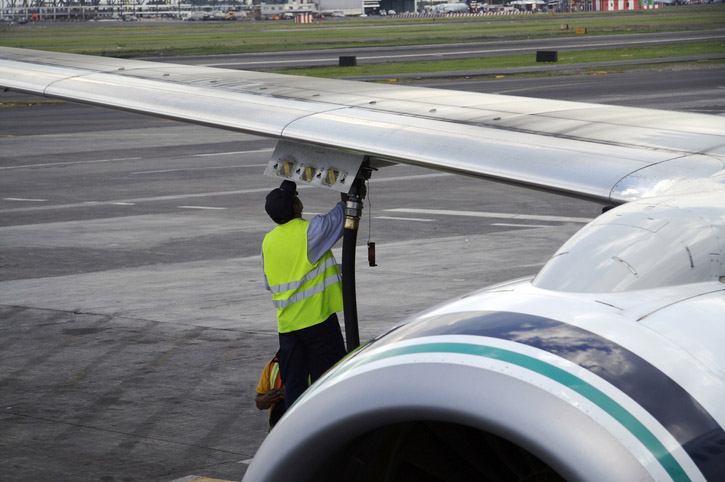
SAF is a type of biofuel that is produced through a process called hydroprocessing. In this process, the biomass is first converted into a synthesis gas, which is a mixture of hydrogen and carbon monoxide. The synthesis gas is then processed to produce SAF, which is then blended with conventional aviation fuel to create a drop-in fuel that can be used in existing aircraft and fuelling infrastructure.
One of the main benefits of SAF is that it has a lower carbon footprint compared to traditional aviation fuels. The carbon emissions produced during the production of SAF are offset by the carbon uptake of the biomass used to produce it, resulting in lower net carbon emissions compared to conventional aviation fuels. This means that using SAF can help to reduce the carbon emissions associated with air travel, which is a significant contributor to global greenhouse gas emissions.
However, while SAF is considered to be a greener alternative to traditional aviation fuels, there are some concerns about the environmental impact of its production and use. For example, there is the issue of ensuring that the biomass used for SAF production is sustainably sourced and produced in a way that does not result in deforestation or other negative environmental impacts. Additionally, there are concerns about the impact of sourcing biomass for fuel production on land use and food security, as large amounts of land and resources may be needed to produce sufficient quantities of SAF to meet demand.
Another concern about the use of SAF for business travel is that it may not actually be much greener than traditional aviation fuels. This is because the production of SAF requires a significant amount of energy and resources, and there is the potential for significant greenhouse gas emissions to be produced during the production process. Additionally, the production of SAF requires the use of chemicals and other hazardous materials, which can have negative environmental impacts.

While SAF has the potential to be a greener alternative to traditional aviation fuels, there are still some significant environmental concerns associated with its production and use. For example, there is the issue of ensuring that the biomass used for SAF production is sustainably sourced and produced in a way that does not result in deforestation or other negative environmental impacts. Additionally, there is the potential for significant greenhouse gas emissions to be produced during the production process, and the use of chemicals and other hazardous materials may have negative environmental impacts.
Overall, while SAF may be a promising solution for reducing the carbon emissions associated with air travel, it is important to consider the full life-cycle impacts of its production and use to truly assess its environmental sustainability. This includes considering the impact of sourcing biomass for fuel production on land use and food security, as well as the potential for significant greenhouse gas emissions to be produced during the production process.
In the context of business travel, it is important for companies to consider the environmental impact of their travel choices, and to choose the most sustainable options available. This may mean choosing to fly on airlines that use SAF or other biofuels, or choosing to reduce the number of flights taken, or even to explore alternative forms of transportation such as trains or videoconferencing.
SAF certainly has the potential to be a greener alternative to traditional aviation fuels, but it is important to consider the full life-cycle impacts of its production and use to truly assess its environmental sustainability.
In My Opinion…
Is Sustainable Aviation Fuel really the magic bullet that so many in the travel industry believe it to be?
We caught up with Gray Dawes Travel’s Director of Account Management, Ian Currington – a active sustainability champion – to find out what he thinks about SAF.

Ian Currington
Director of Account Management
I taken a keen interest in the topic of SAF and, having studied the BTA’s report, I feel we must question the viability and knock-on impact of Sustainable Aviation Fuel development to the wider society and environment. For me the following paragraphs featured in this important document are key:
The production of SAF uses a lot of land and resources, creating issues surrounding food security, deforestation (!), water, and land use. This may result in competition for land used for other needs like food and housing.
Furthermore, despite the positive impact SAF has on the environment, the production and harvest of these feedstocks threatens other industries. For example, cooking oils are often used for livestock feed, or the paper industry which relies heavily on forestry waste.
Competition for the latter threatens overexploitation, threatening the natural environment. Taking crop wastes off the land solely to produce SAF means lower organic matter being returned into the soil, therefore reducing the fertility and structure of the soil, which then limits the use of that land after its harvest.
The concept of SAF is good, however looking through all the noise and posturing (mostly by people invested into SAF themselves), I can only see a limit of what can be produced in the precious and agricultural land space available. The competition for land will drive up food prices and availability. Also, as the BTA’s report says, the SAF crops damage the soil structure which requires a very complex balancing act by farms.
The question is: what’s the alternative though, given new technology isn’t yet available?
Is SAF really the panacea for the travel industry and is anyone providing the alternative balance to the argument?
Related Articles

Hoe eenvoudig is het om over te stappen naar een andere zakenreisorganisatie?
Soms lijkt overstappen de logische keuze: je hebt een voordeligere aanbieder gevonden of je huidige aanbieder past niet meer bij je behoeften. Toch blijft de vraag: wat als de overstap zelf meer moeite kost dan het probleem dat je wilt oplossen? In dit artikel bekijken we hoe het overstapproces verloopt en laten we zien waarom het vaak minder ingrijpend is dan mensen verwachten.

A Better Business Travel Experience
From an expanded Flying Club status match programme and world-class airport lounges to increased services on key international routes, Virgin Atlantic is making it easier than ever for travellers to enjoy its premium experience. Here’s a closer look at what’s new for 2026 and beyond.

Istanbul: de gids voor zakenreizigers
Uw complete introductie tot de culturele en economische hoofdstad van Turkije
Op zakenreis naar Istanbul?
Bent u van plan om voor werk naar Istanbul te reizen? Ontdek de op één na meest bezochte stad ter wereld in deze uitgebreide gids voor zakenreizigers.