
Travelling to Rome?
Are you planning on travelling to Rome for work? Get to know one of the world’s most storied cities in this comprehensive guide for business travellers.
Founded, according to legend, in 753 BC on the banks of the Tiber (by twin brothers Romulus and Remus), Rome has spent the better part of 3000 years at the centre of Western civilisation. From the seat of a republic that dominated the ancient world to the capital of a G7 nation, it has always been a city of immense power and defining culture.
Rome’s transformation from ancient empire to modern city is what makes the city so compelling. The marble columns of ancient forums stand alongside the towering glass walls of the business district. The buzz of the financial and government quarters dissolves, just a few, winding streets away, into trattorias that have been feeding locals for generations and piazzas that have stood the test of time.
But it’s not just its history that sets Rome apart. The city’s metropolitan GDP exceeds €100 billion, and it serves as Italy’s primary centre for government, public administration, media, and defence industries. It is home to the headquarters of major Italian and multinational corporations, and its proximity to the institutions of the European Union makes it a key destination for political-related business travel.
In this comprehensive guide for business travellers, we help you navigate Rome’s unique business ecosystem, share practical tips for getting around, and highlight our top 3 things to see or do to make your trip unforgettable.
Rome Fact File

The flag of Rome, introduced in 1870, the year when the city was incorporated into the Kingdom of Italy.
- Summer (Jun–Aug): 32°C (90°F)
- Autumn (Sep–Nov): 20°C (68°F)
- Winter (Dec–Feb): 10°C (50°F)
- Spring (Sep–Nov): 18°C (64°F)
Getting To Rome
By Air
“in aereo”
Leonardo da Vinci International Airport (FCO), also known as Fiumicino Airport, approximately 30 km southwest of the city centre, is Rome’s primary destination for the vast majority of long-haul and European flights. It is Italy’s busiest airport and well connected to the city via the Leonardo Express rail service, which runs directly to Roma Termini in approximately 32 minutes.
Alternatively, Ciampino Airport (CIA) sits around 15 km southeast of the city centre and handles a large volume of low-cost carrier routes.
By Road
“in macchina”
Rome sits at the heart of Italy’s motorway network and is well connected by road to Milan, Naples, Florence, and other major cities. However, traffic congestion within the city is significant and largely unpredictable, particularly in the historic centre, which has extensive Limited Traffic Zones (ZTL) that are rigorously enforced by cameras and carry automatic fines for non-residents.
Self-driving is not recommended for business travellers unfamiliar with Roman road conditions and the ZTL system. Pre-arranged executive car services or app-based rideshares remain the most practical and reliable ground transport options.
By Rail
“in treno”
Italy’s rail network is one of Europe’s best, and Rome is extremely well connected by high-speed train. Trenitalia’s Frecciarossa and Italo services link Roma Termini to Milan in approximately 3 hours, Florence in under 1.5 hours, and Naples in just over 1 hour.
For business travellers arriving from other Italian cities, the train is frequently a better option than flying. Roma Termini, the city’s main station, is also a hub for the Metro network and well served by taxis and rideshare apps.
Business Culture & Etiquette
Doing business in Rome is all about understanding Italy’s idiosyncratic professional culture. Romans, like Italians more broadly, place enormous value on personal relationships and quality face-to-face interaction.
The pace of business can feel less frenetic than in cities such as London or Frankfurt, but this should not be mistaken for a lack of seriousness. Appearance also matters enormously. Italy invented the concept of ‘bella figura’, otherwise known as ‘the art of making a good impression’. Dressing well is deeply embedded in professional life, and a polished appearance signals respect for your counterparts and for the meeting itself.
Greetings should be warm and physical. Handshakes are standard in formal first meetings, and a kiss on both cheeks is common between established contacts.
A Few Other Business Etiquette Top Tips
- Meetings might not start on time. Romans can be a little more flexible in their business dealings. This is a cultural normality, not a sign of rudeness.
- Eating is a part of business culture. Business lunches and dinners are a core part of the professional culture. Never decline an invitation to eat without good reason.
- Football and food are often good topics of small talk. Just remember that Romans are passionate about both subjects!
Crime & Safety
Rome is, by the standards of major world business destinations, a safe city for travellers who maintain a good sense of awareness. Violent crime directed at visitors is rare, but petty theft and pickpocketing are widespread, particularly in tourist-heavy areas.
Pickpocketing is most common on public transport (particularly the 64 bus route, the Metro, and around Roma Termini), in crowded piazzas, and near major tourist sites. Keep phones and wallets secured, avoid wearing expensive jewellery on foot, and be alert to distraction techniques used by opportunistic thieves operating in groups. The main business districts – EUR, Parioli, the area around Via Veneto, and the central government quarter – are generally safe and well policed.
Licensed taxis from official ranks or pre-booked transfers are the recommended option for airport runs and late-night journeys. Uber operates in Rome but with a smaller fleet than many European capitals; official taxis (white, with a meter) from designated ranks at Termini and Fiumicino are a reliable alternative.
A Few Other Crime & Safety Tips
- 112 is the universal emergency number in Italy, covering police, ambulance, and fire services.
- English proficiency in Rome’s business community is generally good, but less reliable in everyday settings. A translation app remains a useful travel companion.
- Italy drives on the right-hand side of the road.
Getting Around Rome
By Metro
“in metropolitana”
Rome’s Metro system is limited by European capital standards, with just two main lines (A and B) plus a newer partial line (C). Line A connects Termini to the Vatican and passes through the Spagna and Barberini stops, useful for travellers staying near the historic centre or Via Veneto.
The Metro is fast and reliable when it runs, though it can be heavily crowded and is a known target for pickpockets. Trains run from approximately 5:30am to 11:30pm (and until 1:30am on Friday and Saturday nights).
By Bus
“in autobus”
Rome’s bus network is extensive and covers areas the Metro does not reach, including the EUR business district and many residential and commercial neighbourhoods. However, the system is complex, subject to significant traffic delays, and challenging to navigate without local knowledge or a reliable transport app.
For business travellers, buses are best considered a secondary option. ATAC’s official app and Google Maps both provide route guidance, but taxis or rideshares will usually offer greater predictability and comfort.
By Taxi & Rideshare
“in taxi”
Licensed white taxis are widely available in Rome and can be hailed at designated ranks, called by phone, or booked via apps including itTaxi and FREE NOW. They are metered and regulated and, for business travellers, the most consistent on-demand transport option.
Uber operates in Rome but in a more limited form than in many other major cities, primarily via the Uber Black (executive vehicle) tier. Always use official, licensed services and avoid accepting rides from unlicensed drivers who approach travellers at the airport or Termini, a known source of inflated and disputed fares.
Top 3 Things to See or do in Rome
If you find yourself with a bit of free time on your business trip, Rome is a city built for exploration and offers plenty to see and do. Here are our top 3 recommendations…
1. The Colosseum and Roman Forum
No visit to Rome, however brief, is complete without standing in the shadow of the Colosseum. Completed in 80 AD and capable of holding up to 80,000 spectators, it remains one of the greatest feats of engineering in human history.
Directly adjacent, the Roman Forum and Palatine Hill offer an extraordinary walk through the physical remains of the Republic and Empire that shaped Western law, language, and politics. A combined ticket covers all three sites. Book in advance as queues without pre-booking can be substantial.
2. The Borghese Gallery
Set within the elegant Villa Borghese park, this intimate museum houses one of the world’s great collections of Baroque sculpture and Renaissance painting, including extraordinary works by Bernini, Caravaggio, and Raphael.
Entry is by timed ticket only, with a strict two-hour limit per visit. An evening walk through the Villa Borghese park itself is worth the visit alone.
3. Trastevere
For an authentically Roman experience, Trastevere is the neighbourhood to visit. Nestled on the west bank of the Tiber, this mediaeval quarter of cobbled lanes, ivy-covered facades, and candlelit restaurants offers the best of Rome’s evening hospitality scene.
The neighbourhood is home to some of the city’s finest traditional trattorias, independent wine bars, and lively piazzas. On a warm evening, when the streets fill and the light fades over the rooftops, it is clear why Rome is such a popular city to visit.
Discover Rome…
Rome is not simply one of Europe’s great capitals. It is one of the world’s great cities, full stop.
The combination of business opportunities, cultural history, and the particular warmth of Italian professional life makes it a destination unlike any other. Travelling to and within the city requires a bit of preparation, including how to navigate the ZTL restrictions and metro system, but the rewards are worth it.
So whether you are meeting government counterparts in the ministries around Palazzo Chigi, attending a conference in the EUR district, or building relationships over a long lunch in Parioli, Rome is a business travel destination that is hard to forget.
City Guides

Seoul: A Business Traveller’s Guide
Are you planning on travelling to Seoul (서울) for work? In this comprehensive guide to the city for business travellers, we delve deeper into navigating the city’s unique corporate landscape, offer our top tips for getting around, and pick out our top 3 things to see or do to make your trip unforgettable.
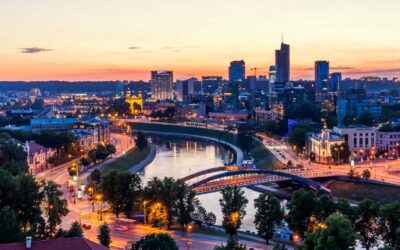
Vilnius: A Business Traveller’s Guide
Are you planning on travelling to Vilnius for work? Once referred to as the Rome of the North for its reputation as a stronghold of Catholic values and its architectural beauty, the city is fast becoming a central business hub and a cradle for fledgling startups. Throw in competitive tax rates and a government actively supporting foreign investment, and you’ll see why Vilnius is the worst-kept secret for businesses of all sizes. In this comprehensive guide to Vilnius for business travellers, we delve deeper into navigating the city’s unique corporate landscape, offer our top tips for getting around, and pick out our top 3 things to see or do to make your trip unforgettable.
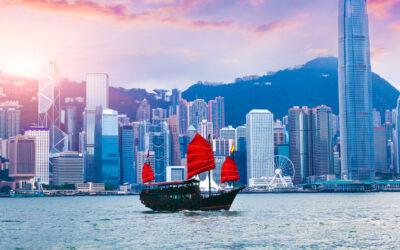
Hong Kong: A Business Traveller’s Guide
Strategically located in South China, Hong Kong offers unparalleled access to the burgeoning Asian market and is often defined as the city where East meets West. Colonial-era architecture stands proudly beside soaring modern structures, while ancient temples co-exist with bustling financial districts. This harmonious blend reflects Hong Kong’s fascinating history as a British colony that later transitioned to a Special Administrative Region (SAR) of China. In this comprehensive guide to Hong Kong for business travellers, we delve deeper into navigating the city’s unique corporate landscape, offer our top tips for getting around, and pick out our top 3 things to see or do to make your trip unforgettable.